Friday Finds: United States Online Historical Newspapers

I discovered this simple website that is a good resource for identifying historical newspapers online:  United States Online Historical Newspapers is found at https://sites.google.com/site/onlinenewspapersite/Home/usa . Its author has a blog you can subscribe to which has news about various newspaper digitization projects.

It is not comprehensive, but used together with other indexes, such as Historical Newspapers Online at  http://gethelp.library.upenn.edu/guides/hist/onlinenewspapers.html , you might find digital newspapers online you did not know existed.

FYI, if you find that one of these indexes identifies a digital newspaper at GenealogyBank, this subscription site is available for free at your nearest LDS Family History Center.

Of course, don’t forget about the Library of Congress newspaper resource “Chronicling America” found at http://chroniclingamerica.loc.gov/ .   You can search their digitized newspapers by clicking on “Search all digitized newspapers 1836-1922” or locate microfilmed newspapers by clicking on “Search U.S. Newspaper Directory, 1690 to Present” and then order a film through inter-library loan to your local library.

Happy Trails!

Three books for Western States research

Here are three books I have found helpful and interesting in researching the Western States:

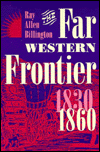
1.  Ray Allen Billington, The Far Western Frontier, 1830-1860, (Harper and Row, 1956)

I like the illustrations and maps in this book.  There are some really good migration maps, such as “Routes to the Gold Fields, 1849,” and “The Overland Trails.”  It includes a valuable bibliography at the end of the book with many entries for each chapter.  There are 12 chapters that discuss various aspects of western U.S. expansion in a scholarly but understandable way, and I was impressed by the extensive footnotes.  I often use footnotes to lead me to other sources.

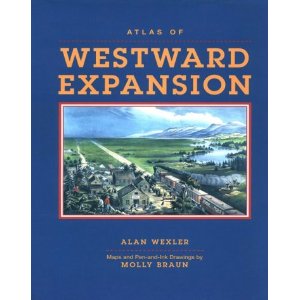
2.  Alan Wexler, Atlas of Westward Expansion, (Facts On File, Inc., 1995)

As an atlas, this book obviously is loaded with maps, and there is also good narrative for each one.  The maps are pen and ink drawings which are easy to understand, yet detailed enough to be useful.   It also has a good chronology of U.S. Territorial expansion (1750-1917) and a good bibliography.

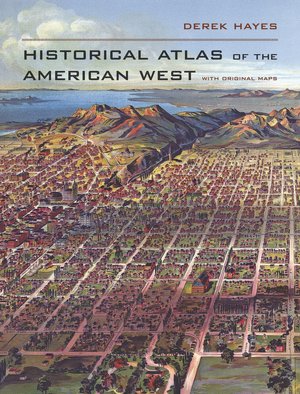
3.  Derek Hayes, Historical Atlas of the American West, with Original Maps, (University of California, 2009).

I think the description on Amazon.com says it best: “Spectacular in scope and visually brilliant, this atlas presents a sweeping history of the American West through more than 600 original, full-color maps and extended captions.”  It is a beautiful book and very interesting, too.  The maps are thoroughly source-cited, and there is also a valuable bibliography.  I highly recommend it.

These three books complement each other and combine to provide a good foundation for Western States research.

150-year Anniversary of the Homestead Act

Today marks the 150th anniversary of the Homestead Act—one of the most significant influences on the growth of the western United States in history.  The Homestead Act was an act of Congress that allowed individuals over 21—men, women, or freed slaves—to claim 160 acres in the Public Domain at no cost.  The only requirement after filing a claim was to live on the land for five years, build a home, cultivate the land, and make improvements.  At the end of  five years the settler could “prove up” his claim at the nearest land office and become the legal owner.  Approximately 10% of the United States land mass was settled this way, and over 4 million settlers applied.  Of course, only about 1.6 million (40%) successfully met the requirements and fulfilled their claims, for a variety of reasons.

Genealogists love the Homestead Act because it produced voluminous land-entry case files packed with personal information about claimants. They generally range in size from 8-25 pages. Regardless of whether or not a claimant was successful, the application files still exist and those are what we seek. These files are housed at the National Archives but are in the process of being digitized through a joint project of FamilySearch, The University of Nebraska, NARA, and Fold3.com.  Right now they are about 39% complete.

For text of the Homestead Act, history,  photos, maps, and sample file documents check out the websites below.

Here is a link to the Homestead National Monument in Beatrice, Nebraska, site of one of the very first Homestead claims:

http://www.nps.gov/home/historyculture/index.htm

And here is a link to the Bureau of Land Management’s commemoration site:

http://www.blm.gov/wo/st/en/res/Education_in_BLM/homestead_act.html

The Bureau of Land Management  (BLM) website has an index to many of the homestead records:

 http://www. glorecords.blm.gov 

The actual files can be ordered from the National Archives website using the information obtained in the BLM index above:

http://www.archives.gov/shop/  click on “Order reproductions”

Most people do not realize there were many more Acts of Congress that provided settlers with a way to obtain land.  A timeline on the BLM website lays it all out:

http://www.glorecords.blm.gov/reference/default.aspx#id=01_GLO_Records|02_Public_Lands_History

One interesting little factoid is the politics surrounding the Homestead Act of 1862.  As you will recall, the Civil War started in 1861.  By 1862 the Southern States had seceded and had no representation in the United States Congress.  Prior to 1861 there had been several attempts to pass legislation such as the Homestead Act, but it was controversial because of clashing ideologies between North and South.  The Northerners envisioned states where all were free to stake a claim and farm their own land, whereas the Southerners wanted to preserve the plantation/slave economy in the new states that would be created.  This was an impasse that prevented any kind of land Act, and Congress seized upon the opportunity first chance they had in May of 1862.  The Homestead Act officially began at midnight on 1 Jan 1863.

Happy Trails!  And Happy 150th  Birthday Homestead Act!

Friday Finds: Digital newspaper archives for Utah and Colorado

Every week I try to share libraries, archives, or collections I have found useful to Western States researchers, and some of the things I have discovered within them.

This week I want to highlight the digital historic newspaper archives available for Utah and Colorado.  Family historians know newspapers are a valuable resource.

They are especially valuable in the western states because newspapers were established fairly early when communities were formed.  State and federal government offices were not very accessible to the remote settlements and sparsely settled states, and until the middle of the 19th century most of the west was under the jurisdiction of a territorial government.  Newspapers were much more likely to provide clues to early western settler’s lives than official government records before 1900.

Here are three tips for using newspapers in family history research:

1.  Look for more than births, marriages, and deaths in newspapers.  Check out every “hit” the search finds and add these events to a timeline for an individual.  The other events in a person’s life can reveal vital clues as to family relationships, property they owned, and places they lived or did business.

2.  Search every newspaper within a 60 mile radius of a person’s home.  Vital events were sometimes reported in more than one newspaper.

3.   When looking for an obituary, include newspapers in the towns of a person’s grown children and siblings.

 

Utah Digital Newspaper Archive

The Utah Digital Newspaper Archive (UDN) can be found at http://digitalnewspapers.org/ and is one of the best online newspaper resources in the United States.  According to the website “UDN is built upon a distributed state-wide collection of newspapers that is aggregated into a single, searchable index hosted at the U of U. We partner with Brigham Young University, Utah State University, and Salt Lake Community College to accomplish this, each hosting a portion of the content.”

It is easy to use and can be searched by individual newspaper title or by the entire collection.  It is also browseable by title, which is helpful if you want to get a feel for community life during a particular time.  I especially like the “Browse by County” feature, as it is helpful to see which newspapers existed for a geographic region, and the “Paper Timeline” is a handy graph to  help you locate a newspaper by time period.  The advanced search feature allows for all kinds of creativity in searching for an elusive ancestor.  Here is an obituary I found for Alexander Matheson in Parowan, Utah:  http://tinyurl.com/78mw2yz

Colorado Historic Newspapers Collections

According to the website, “The Colorado Historic Newspapers Collection (CHNC) currently includes more than 500,000 digitized pages, representing 163 individual newspaper titles published in Colorado from 1859 to 1923. Due to copyright restrictions, CHNC does not generally include newspapers published after 1923.”  The CHNC is not as easy to search as the UDN site, but it is still a great resource which dates back even before Colorado’s territorial history began in 1861.

I found out that J.B. Tanner (likely Joseph Baldwin Tanner) won several awards for horse breeds at the Montezuma, Colorado County Fair in October 1907.  This helps to place him in the area at that time.  Here is a link to the article:  http://tinyurl.com/7plgcbu  We also learn about his purchase of a new trading post in this article: http://tinyurl.com/7plgcbu
Friday Finds: Northern Arizona University Cline Library – Special Collections

Four Corners Research

Western States researchers have some great archives and libraries to tap into, and each week I highlight archives, libraries and collections I have found valuable, along with some of my finds there.

Anyone doing research in the Four Corners area (Utah, Colorado, Arizona, New Mexico)  will want to take a look at the Northern Arizona Cline Library’s online collections http://archive.library.nau.edu/index.php , as well as doing some on-site research. It has some real gems in its Special Collections.  These include:

TIP:  On the homepage search by keyword, or try “advanced search” and select only the collection you want to search within.

Northern Arizona University is located at S San Francisco St, Flagstaff, Arizona 86011.   (928) 523-901

Colorado Plateau Archives

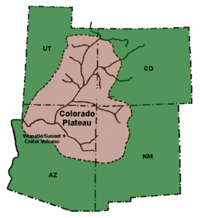
The Colorado Plateau Archives, one of the collections above, is an online exhibit for the   images, documents, oral histories, videos, and more for the region encompassing the Four Corners area of the United States.

It includes:

  • Arizona Memory Project
  • Arizona Champion-Coconino Sun Newspaper Index (1887-1894)
  • Arizona Champion-Coconino Sun Newspaper Obituary Index (1883-2003)
  • Manuscript Inventory
  • Over 1 million photos
  • Vertical files

United Indian Traders Association Oral History Project

http://tinyurl.com/73g6zlj

Part of the Colorado Plateau Archives contains the United Indian Traders Association Oral History Project. This is an especially valuable collection.  These are transcripts of interviews done with traders, and they are rich in information about the history of the area.  There is also a huge collection of photographs, all searchable by keyword.

Interviews of particular interest to me as a researcher are the March 30, 1999 video interviews with Joe Tanner <http://tinyurl.com/cpn7ot2>  and J.B. Tanner, who were sons of Ruel Lehi “Chunky” Tanner, grandsons of Joseph Baldwin Tanner, and great-grandsons of Seth Tanner.  These are available online, and Joe talks a lot about the early Tanner history in the Four Corners area.  I am descended from Ruel’s sister Annie Marie Tanner.  There are also interviews with Russell, Jay, and Ed Foutz, who are descended from Joseph Lehi Foutz—another Great-great grandfather of mine.

Arizona Archives Online

NAU is part of the “Arizona Archives Online”   http://www.azarchivesonline.org/xtf/search

This is a great way to search multiple archives and libraries at once.  There are currently 14 institutions throughout the state of Arizona that contribute content to Arizona Archives Online.  I will highlight some of the collections in these archives in future posts:

  • Arizona State University Libraries, Department of Archives and Special Collections
  • Northern Arizona University, Cline Library Special Collections and Archives
  • University of Arizona Library Special Collections
  • University of Arizona Libraries. Center for Creative Photography.
  • Arizona State Museum
  • Museum of Northern Arizona
  • The Arizona Historical Society: Northern/Southern/Papago Park Divisions
  • Sharlot Hall Museum
  • Arizona State Library, History and Archives Division
  • Arizona Historical Foundation
  • Lowell Observatory Library and Archives
  • Heard Museum Billie Jane Baguley Library and Archives
  • Peggy J. Slusser Memorial Philatelic Library