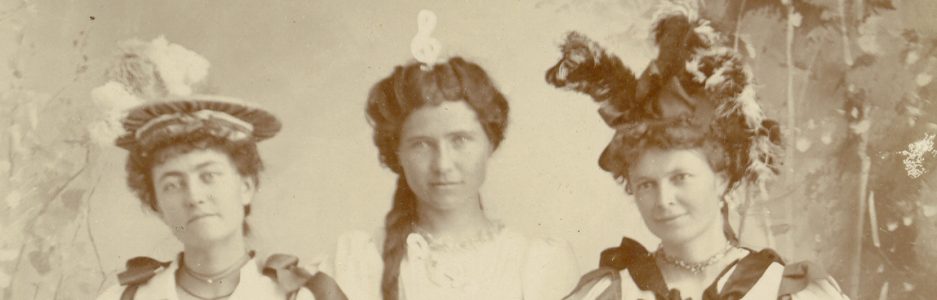
The Fairy Tale Genealogist is at it again. Let’s find out what became of Pinocchio, using records from Ancestry.com and good photo-editing software. You all know that Pinocchio was the wooden puppet whose wish came true when he became a real, live boy. But I’m wondering if he may have had second thoughts when the draft board came calling during WWI. Continue reading “Pinocchio: Records don’t lie (or do they?)”
Snow White and the Seven Dwarfs: Little Known Facts Uncovered Thanks to Ancestry.com
Subscription genealogy websites are booming in popularity. It has never been easier to unearth fascinating facts about your kin, thanks to Ancestry, My Heritage, Footnote, Find My Past, and FamilySearch (a non-subscription site), among others.
Naturally, this led me to wonder about the descendants of the Seven Dwarfs. Were they having any luck with their family trees? Were there other famous animated characters in their ancestral lines? And how about some background on the Dwarfs? Did they always work as miners? When did they move to the forest? Were they related or just sharing rent? And what’s the real story with Snow White? Is there any truth to her family lore? What was her mother’s name. Was she really an only child? Continue reading “Snow White and the Seven Dwarfs: Little Known Facts Uncovered Thanks to Ancestry.com”
Baby Mohamed Clendennen: A lesson in creative indexing
Today, I share a humorous reminder of why we always check the original source whenever possible, and always look at indexes and abstracts with a healthy dose of “hmmmm…what does it really say?” Last week, whilst searching for Thomas Clendennen [Clendenen] in the 1910 U.S. Census index, I was surprised to find a newborn, little “Baby Mohamed,” enumerated with the family.
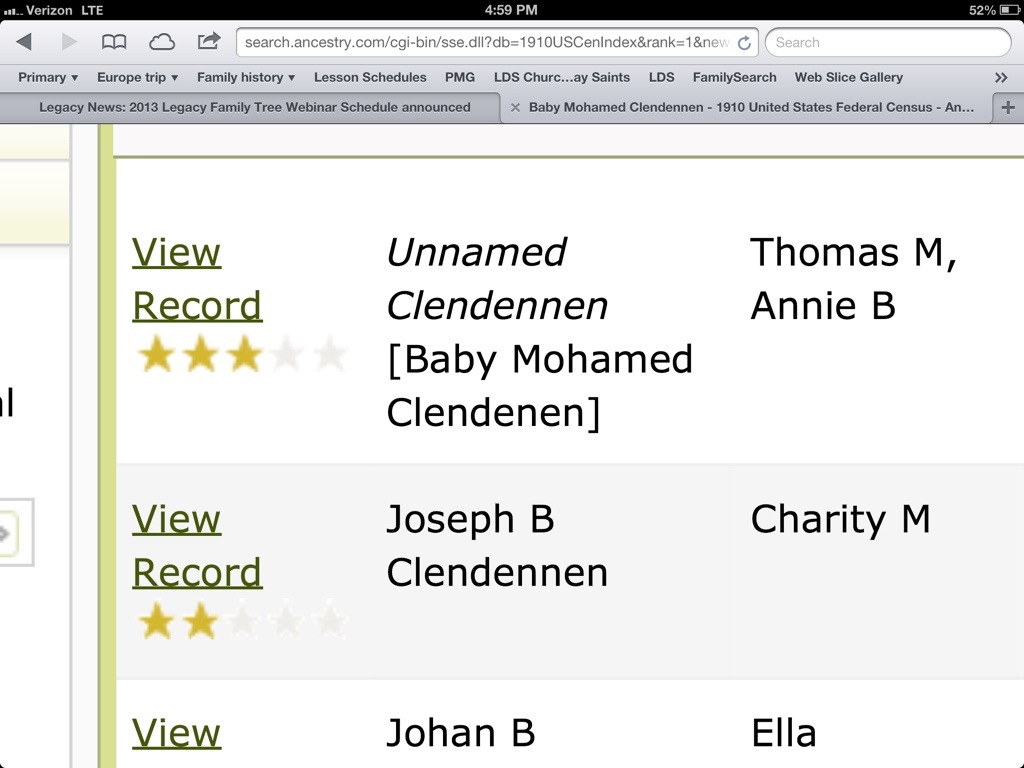 Could the Clendennens have been that rare Muslim family in the Bible Belt of central Texas in 1910? That would certainly be a noteworthy entry in the family history. (But…Hmmm, what does it really say, came that little voice inside me.) And so here it is—the actual entry in the census record. What do you think it says?
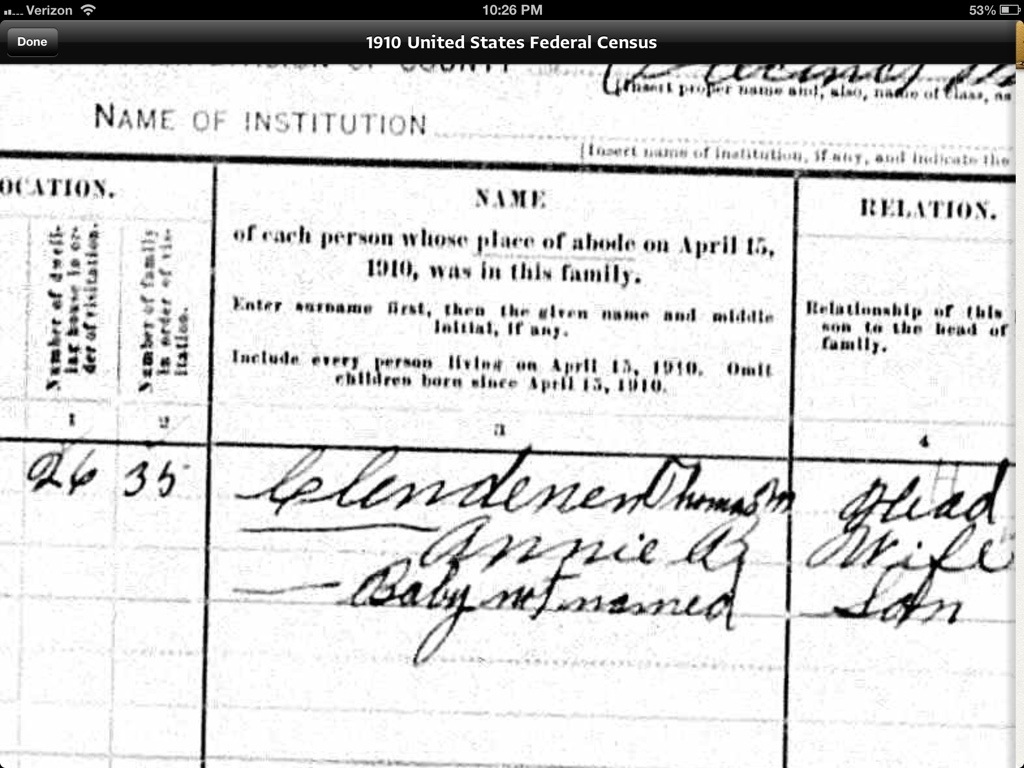 Yes, little “Baby Mohamed” is actually little “Baby Not Named”, but it is easy to see how a casual glance at the handwriting could lead an indexer to mistake a wee yet-to-be named Baptist for the namesake of an Islamic Prophet. So folks, let’s make a resolution to be thorough in our research—don’t be satisfied with information obtained from indexes or abstracts. Dig a little deeper into original sources—you may solve a mystery or two.
Google Books Reduces its Digitizing and Preservation of old Books while Internet Archive Increases its Efforts at the Same Thing
I love using Internet Archive, so this is great news on that front.

An article in The Message states that Google is reducing its efforts at digitizing old books. That certainly is a loss for genealogists, historians, and many others. In what appears to be an unrelated move, the Internet Archive is INCREASING its efforts at digitizing old books, adding 1,000 books to the online collection EACH DAY. Perhaps there is hope for genealogists after all.
 In 2004, Google Books signaled the company’s intention to scan every known book, partnering with libraries and developing its own book scanner capable of digitizing 1,000 pages per hour. Since then, the company has digitized millions of old books, creating a valuable archive. Google Books is still online, but has curtailed its scanning efforts in recent years, likely discouraged by a decade of legal wrangling still in appeal. The Google Books Blog stopped updating in 2012 and the Twitter account has been dormant since February 2013.
View original post 291 more words
Genealogy’s Star: Online Digital Newspaper Collections by State — The Lists Introduced
This post is reblogged from Genealogy’s Star blog, by James Tanner. There are some great links to lists of online newspaper collections and it seemed worthwhile to just reblog the whole post. I will soon reblog his list of online newspapers by state, or you can just go straight to his blog for it.
There are two preliminary parts to this blog post which include an introduction and a review of the applicable copyright law. Here are the links should you care to review the background and issues of this very interesting topic.
- Online Digital Newspaper Collections by State — The Introduction
- Online Digital Newspaper Collections by State — Copyright Issues
Now on to the blog post:
There are quite a few collections of newspapers that cover extensive blocks of time and geography, i.e. they include more than one state’s newspapers. It is important to understand that there is some overlap between these huge online collections, but any thorough genealogical search would necessarily require searching every single collection. Of course, that could become a problem since most of these collections are subscription based and not only does the genealogist have to find all of the collections, they also have to figure out how to access them and possibly pay for the content. I say this so that the potential researcher does not feel comfortable ignoring the subscription based sites and only researching the free online content.
You might also recognize that the effectiveness of the various search engines and the degree to which the optical character recognition programs work affects the ability of a researcher to find specific content using a search. There is really no way that a careful researcher can be assured that there are not important facts about any given ancestor other than to do a page-by-page search, assuming that the online project provides access to multiple pages of the same search. Researchers should also recognize the fact that helpful information may be contained in paid advertising and display advertising in the newspaper digitization project may not have been included, especially if the advertising consisted of images rather than text. But if you come from an old genealogical tradition, you are used to searching microfilm page and page and this is no different.
As it turns out, unlike digital maps websites, there are exhaustive online references to newspaper collections listing each state of the United States in detail. It also turns out that there are a huge number of websites, far more than you could imagine. There are hundreds of websites. Just think what a great opportunity this is. You will never run out of research opportunities.
There are a substantial online lists of available digitized online newspaper collections. See the following websites for lists:
- Historical Newspapers Online — University Libraries, University of Illinois, Urbana-Champaign
- Wikipedia:List of online newspaper archives
- Historical Newspapers Online — Penn Libraries, University of Pennsylvania, an extensive list by state of online newspaper collections
- Providence College Research Guides, Newspapers — A good start at a list
- Accessible Archives — a good collection of links to online archives, including newspapers
Here is a list of the multi-state online digital newspaper projects that I have found. I do not pretend that this is an exhaustive list, because these collections are sometimes hard to find online and also because new projects pop up frequently. Just because I was unable to find a specific newspaper project for any of the states or territories does not mean that there are no online digitized newspapers from that jurisdiction, any such content may be included in one or more of the large collections.
- Library of Congress, Chronicling America, National Digital Newspaper Project — be sure an note the US Newspaper Directory, 1690 – Present — Free
- NewspaperArchive.com — Subscription
- ProQuest Historical Newspapers — usually available only through libraries and universities
- NewsBank.com — usually available only through libraries and universities
- World Newspaper Archive — part of NewsBank.com, usually available only through libraries and universities
- GenealogyBank.com — part of NewsBank.com, Subscription
- Google News — a huge collection of back issues of various newspapers by name
[NOTE: Here is a list of regional and national lists of online digital newspaper collections Genealogy’s Star included with their state lists:]
- SmallTownPapers.com
- Densho Digital Archive
- Troy University, The Wiregrass Archives
- Internet Public Library (ipl2), Newspapers and Magazines
- Google News — Remember to search on Google for newspaper titles
- Library of Congress, Chronicling America — Remember to search for additional copies of newspapers in the US Newspaper Directory, 1690-Present
- BYU-Idaho, David O. McKay Library, Newspaper Databases
- Northwest History Database
- Pacific Northwest Regional Newspaper and Periodical Index
- Denver Public Library, Western History and Genealogy
- USNPL, US Newspapers
- The Internet Archive — search by title or state
- Paper of Record
- Valley of the Shadow, Civil War Era Newspapers
- Providence College, Research Guides, U.S. Digital Newspaper Collections
- Texas A and M University, Newspapers
- University of Arizona, Historic Mexican and Mexican American Press
- Harvard Library Research Guides
- Cornell University Library, Caribbean Newspapers on the Internet
- Auburn Avenue Research Library on African American Culture and History
- Georgia State University Library, Southern Labor Archives
- The King Center, Digital Archives
Now on to the state-by-state list. I am listing the states but still have very limited access to the Web here in Alaska and will republish this shortly with the data. Thanks for your patience. [NOTE: the links to Western States have been incorporated into On Granny’s Trail “Western States Links”]
 On Granny's Trail