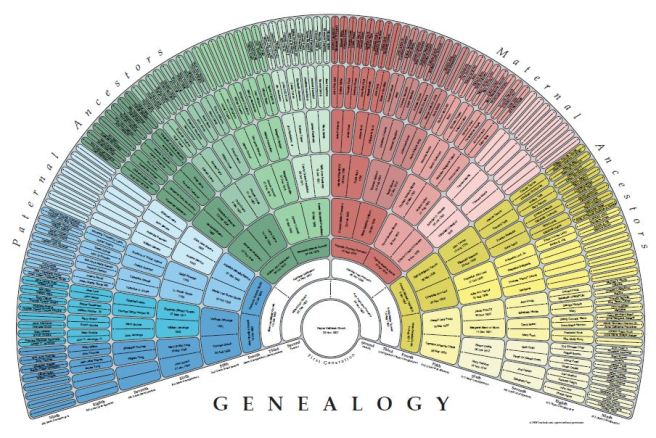
A few weeks ago I needed a gift for the outgoing director of our Family History Center. The Family Chartmasters website came to the rescue with a beautiful “bowtie” pedigree chart. So I am giving them a plug today. A bowtie chart shows the ancestors for a couple, with the husband’s extending to the left and the wife’s extending to the right:
Design your own chart and give a beautiful gift
This is actually a chart I designed myself using their easy “design it yourself option. For the gift I gave, I made a 5 generation chart on 20″ x 24″ presentation paper (archival ink) for $24.95. I added the background from their ample library, added boxes for additional children, and added embellishments and a title. I even could have opted for a background using my own family photograph, like an ancestral church, or a family portrait.
I liked the results so well I made one for myself (that’s the one pictured above). I chose to include 7 generations so I needed to use the 36″ x 48″ paper, but sizes begin at 8.5″ x 11” and depend on the number of generations you include. I also had my pick of paper types, such as presentation paper, photoglossy, parchment, matte canvas, standard bond, and vinyl. The presentation paper suits me fine as I am going to frame it behind glass, but the canvas matte sounds pretty great. This configuration will cost me $49.95, but extra copies will only be $24.98.
If you prefer, they can create a chart for you and will work with you to get it just right. In either case, you will need to provide data for the chart. Do this by uploading a GEDCOM file from your genealogy software, downloading from Familysearch.org, or entering the data manually.
If you have created a family tree on Familysearch.org you can create the world’s fastest fan chart on www.createfan.com. Just log into Createfan using your Familysearch username and password and it will access your “Family Tree” and instantly show you a colorful 9 generation chart, created as a PDF file.
There are links to website partners who will print this chart for you—the least expensive being Family Chartmasters above, who can print it for as low as $6 (20 lb bond, not archival) and as much as $66 (matte canvas, archival quality pigment inks).
Now, you might be wondering just how fast you can get one of these, because you are, um, still trying to think of the perfect gift for your parents, spouse, or children. Good news! You can pay extra for expedited service, and then have it sent Express Mail and, voila, your gift problem is solved. I finished creating my chart on a Thursday night and had it in my mailbox the following Tuesday.
This of course, presumes you have already done the research to know who should go into the chart! Not sure Family Chartmasters will appreciate my plug one week before Christmas, but they shouldn’t have given me such great service!
There are other options for creating quality genealogy charts, such as those in your genealogy software program, but I have not seen any better than Family Chartmasters. Two thumbs up from On Granny’s Trail!
Hey! You! Yes, you! Are you listening? I hope so, but if not you have 24 hours to get it right, because Friday the 23rd is StoryCorps’ National Day of Listening. I only know this because as we were driving down highway 101 for a Thanksgiving getaway we were listening to an NPR interview with Dave Isay, founder of StoryCorps. StoryCorps is an innovative project to record, share, and preserve the oral histories of all kinds of Americans—you, me, anyone.
Since 2003, according to the interview, over 50,000 interviews have been recorded, and since the interviews are done in pairs, this accounts for over 100,000 folks who have been recorded. Here’s how it works: 1) Find someone whose story needs to be told. It might even be you! If your parents or grandparents are still living, this is a priceless opportunity for you, 2) Print out the “Great Questions List.” or use the question generator, 3) Sit down with another person as the interviewer or interviewee, push the “Record” button, and begin asking questions.
There are different options for recording an interview.
1. Use StoryCorps’ do-it-yourself guide to get started.
2. Record an interview directly on your computer, tablet, phone or computer, and upload it to their website. Or you can just save the recording as an audio file and share it with family by burning it to CDs.
3. Visit one of their Story Booths.
4. Rent a storykit to make a recording.
5. Bring StoryCorps to your organization’s event to set up a recording booth.
If you record your story on their equipment or in one of their Story Booths, the interview will be saved at the American Folklife Center at the Library of Congress. Pretty amazing!
I thought it appropriate to learn about StoryCorps on Thanksgiving Day, and know it is not a coincidence they sponsor the National Day of Listening the day after a holiday where families traditionally gather. What a great opportunity to take your mom, dad, or grandparents aside to find out more about their lives. I am grateful I was able to record interviews with my parents and grandparents in their lifetimes, and I am more thankful every passing year I can listen to these precious memories in their own voices.
Do not wait another day to record these oral histories—your own or your loved ones’. It is one of the most important things you can do for future generations.
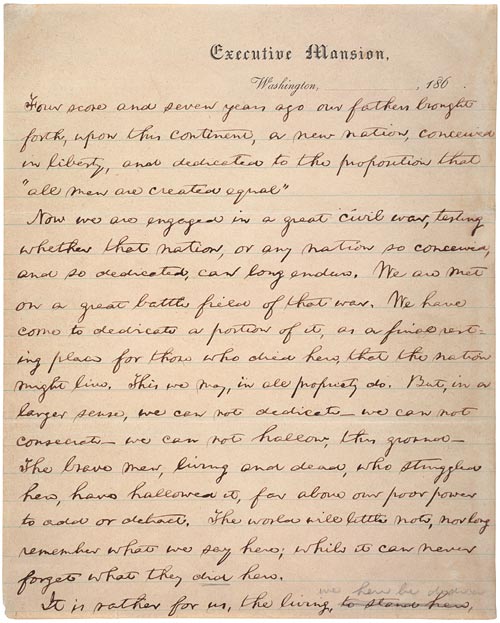
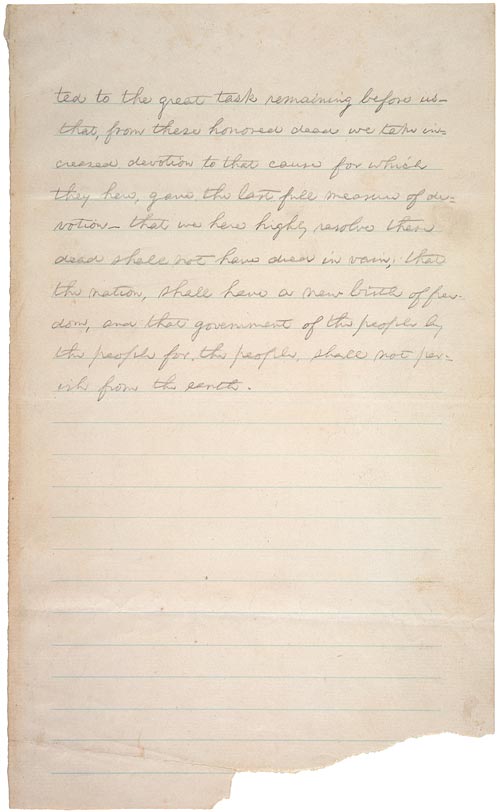
Today marks the 149th anniversary of Abraham Lincoln’s famous Gettysburg Address. The Civil War affected the entire nation—even the folks Out West. Here is an image of Lincoln’s speech, followed by the transcription, as found on www.ourdocuments.gov:
Four score and seven years ago our fathers brought forth, upon this continent, a new nation, conceived in liberty, and dedicated to the proposition that “all men are created equal”
Now we are engaged in a great civil war, testing whether that nation, or any nation so conceived, and so dedicated, can long endure. We are met on a great battle field of that war. We have come to dedicate a portion of it, as a final resting place for those who died here, that the nation might live. This we may, in all propriety do. But, in a larger sense, we can not dedicate — we can not consecrate — we can not hallow, this ground– The brave men, living and dead, who struggled here, have hallowed it, far above our poor power to add or detract. The world will little note, nor long remember what we say here; while it can never forget what they did here.
It is rather for us, the living, to stand here, we here be dedica-ted to the great task remaining before us — that, from these honored dead we take increased devotion to that cause for which they here, gave the last full measure of devotion — that we here highly resolve these dead shall not have died in vain; that the nation, shall have a new birth of freedom, and that government of the people by the people for the people, shall not perish from the earth.
Abraham Lincoln, Draft of the Gettysburg Address: Nicolay Copy. Transcribed and annotated by the Lincoln Studies Center, Knox College, Galesburg, Illinois. Available at Abraham Lincoln Papers at the Library of Congress, Manuscript Division (Washington, D.C.: American Memory Project, [2000-02]) http://memory.loc.gov/ammem/alhtml/malhome.html
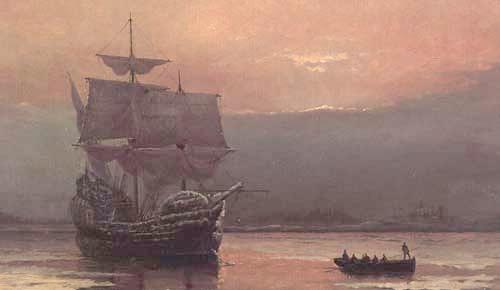
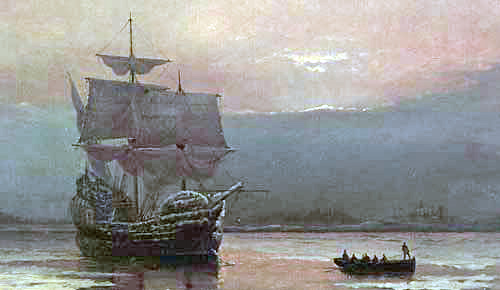
Did you have an ancestor on the Mayflower? Chances are better than you might think, since “tens of millions” of Pilgrim progeny have resulted from the original 102 passengers who set sail from Plymouth, England in September 1620, despite the fact that half of them perished the first winter. One child was born en route—Oceanus Hopkins, and one passenger died en route—poor William Button, so 102 passengers were on the Mayflower when it entered Cape Cod on November 11th. They anchored at what is now known as Provincetown Harbor, and for the next six weeks sent exploring parties out from the Mayflower to scout the area. Did you know they originally had planned to settle in Northern Virginia?
Researching ten generations back to a Mayflower ancestor may sound daunting, but fortunately for us Pilgrim-wannabees, research on the first five generations has been underway since 1960. Although the ambitious project by the General Society of Mayflower Descendants (or Mayflower Society) is incomplete, Mayflower Families Through Five Generations and Mayflower Families in Progress are considered the authoritative sources for documenting descendancy. If you know who your Mayflower ancestor is, check this list to see if the Mayflower Society has published a book about him or her, and see links below to obtain the book.
There are plenty of good resources online to help you learn about the Pilgrims. I enjoyed exploring Caleb Johnson’s MayflowerHistory.com, and also discovered a guide for teachers and students created by Duane Cline and hosted on Rootsweb.com. They both have lots of links to images, maps, and source lists. Of course, you should visit the General Society of Mayflower Descendants webpage—especially their “Books and Publications” area.
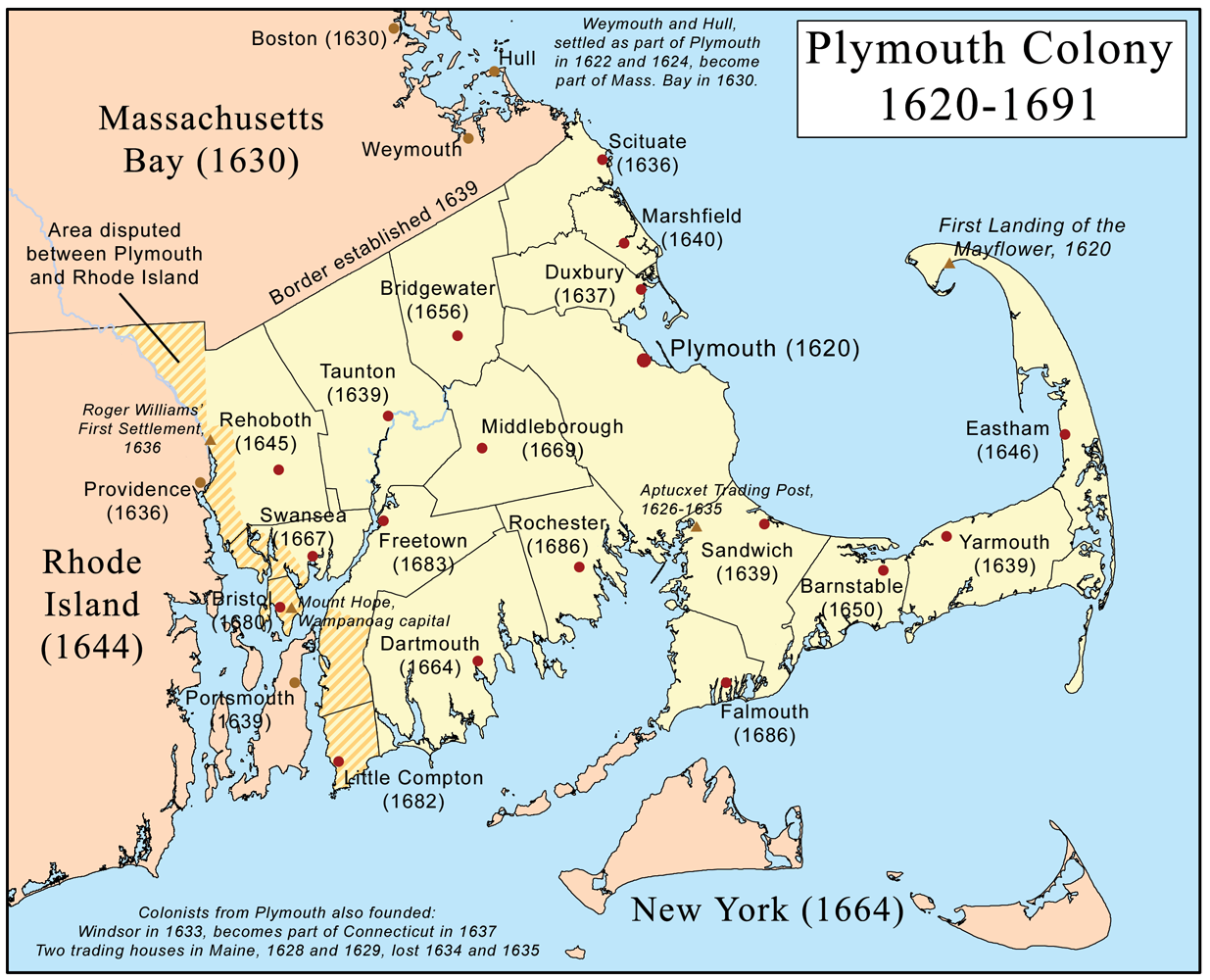
For an organized approach to genealogical research I recommend the Research Wiki on FamilySearch. Typing “Pilgrims” in the search box will bring up a list of results which includes a link to “Plymouth Colony.” (Of course, you could type that in directly if you were smart enough to know that is what it was called, which I did not remember.) This brings up a page with loads of information and links to Colony records, including the American Ancestors website, Mayflower Genealogies, Plymouth County records, and other NEHGS records.
American Ancestors is the website of the New England Historic Genealogical Society, and they have numerous helpful articles relating to early Plymouth Colony settlers, but also a series of articles specifically about Pilgrim research strategies. “Researching Your Mayflower Ancestors: Part III…” details books about each Mayflower passenger published by the Mayflower Society in their Mayflower Families Through Five Generations and Mayflower Families in Progress—mentioned previously. These can be purchased on the Mayflower Society webpage, but they are also available in many libraries. Use Worldcat to locate any of these books in the library nearest to you, or to order them through Inter-library loan.
American Ancestors is a subscription database, but it does have free access to many articles and has a good number of Mayflower articles. Of particular interest are all the Pilgrim Village Family Sketches (use these to give you a starting point, so you will know which town and county records to search in Massachusetts or other states where they might have migrated), an explanation of Pre-1636 New England Immigrants: A Comprehensive Index, and the above-mentioned 6-part series on Mayflower research by Alicia Crane Williams:
American Ancestors also hosts the digital version of Robert Anderson’s The Great Migration Begins: Immigrants to New England, 1620-1633, volumes I-III and the later volumes. Ancestry.com has volumes I-III. The Great Migration Study Project, with its goal to document every person who settled in New England between 1620-1640, hosts a website.
If you are researching Plymouth Colony and the Pilgrims, you will naturally need to check under the broader topic of Massachusetts genealogy. This link has a solid list of the essential published collections for early New England colonization and their Family History Library call numbers, as well as links to relevant family history and genealogy websites. It also describes the Card Index to the Massachusetts Archives. “The Massachusetts Archives is a series of [328] volumes containing documents of Massachusetts from its founding in 1629 to the year 1799.” Eighteen of these volumes are indexed online in the Massachusetts Archives Collection Database, (1629-1799) on the Massachusetts Archives website.
Family Associations have been formed for many of the Mayflower passengers, and they are a great resource for connecting to those with a common research interest.
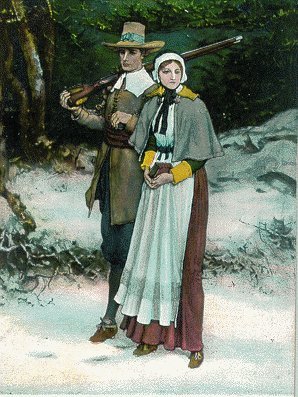
Depiction of John Alden and Priscilla Mullins, reproduced by Lanternpress. Not sure if they are the original artists.
I mentioned in a previous post that I was going to submit an application for membership in the Mayflower Society. Mostly, I was curious about the process. I submitted my “review form” with a simple descendancy chart from John Alden and Priscilla Mullins and received a letter inviting me to submit a preliminary application and fees. Upon receipt of these items I will be sent a worksheet and instructions. The worksheet is something they complete, and it can often have the first five generations or more. I assume then my job will be to provide documentation connecting me to the most recent individual on the worksheet. According to the review form they returned, it looks like I would need to prove descendancy from Seth Crane, who died in Milton, Norfolk, Massachusetts 4 Apr 1803. I haven’t decided whether to go through with it because of the cost (initial dues in California are $165 and then $30 per year thereafter), but it would be fun to document the connection, regardless.
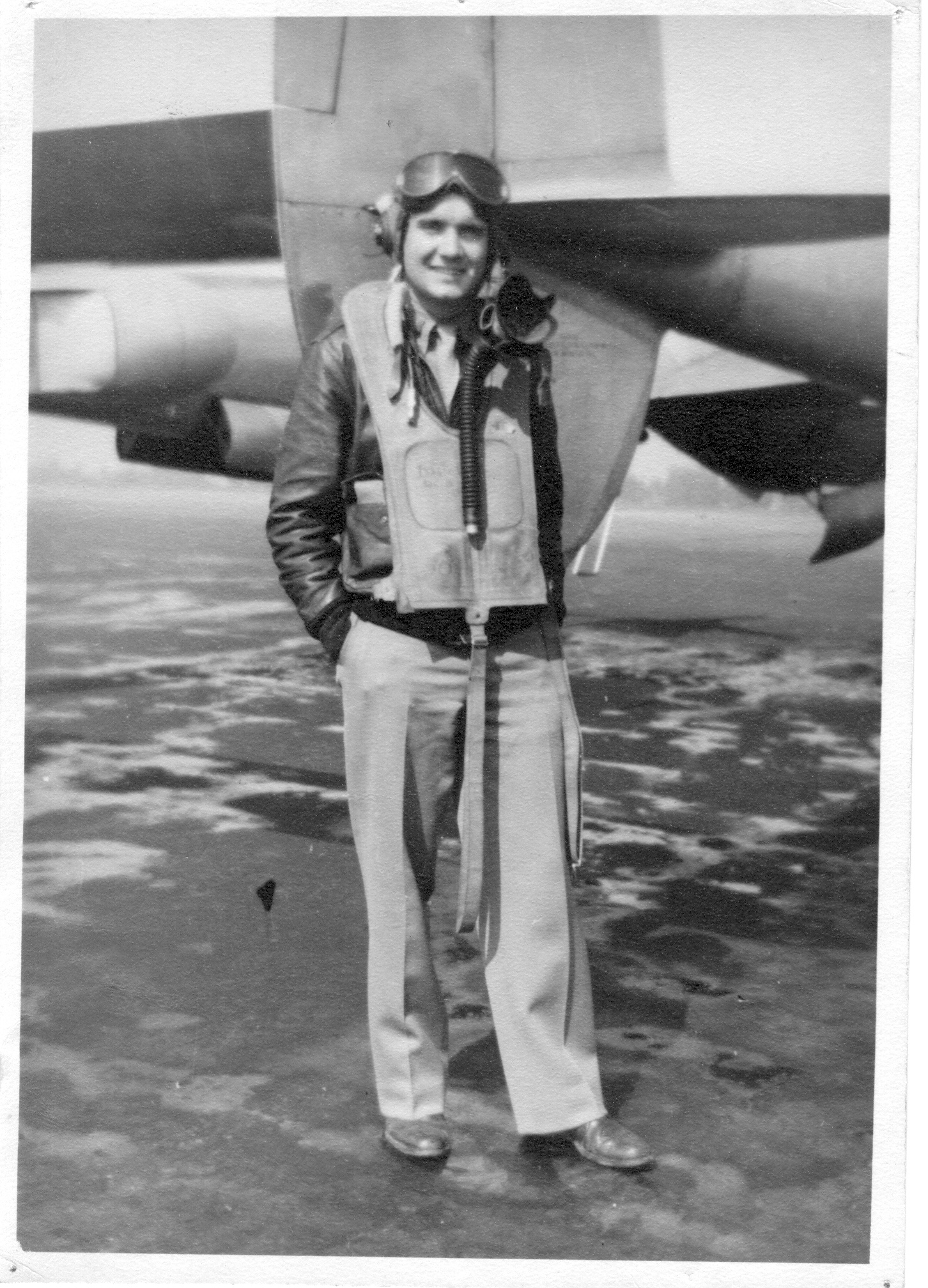
My father Millard Earl Gooch, passed away in 2006, and my mother, Ann Francene Pomeroy Gooch, in 2003. I visited their graves in Claremont, California yesterday. Today, since it is Veteran’s Day, I would like to honor my father by posting a few pictures representing his military service in the Army Air Corp during World War II.
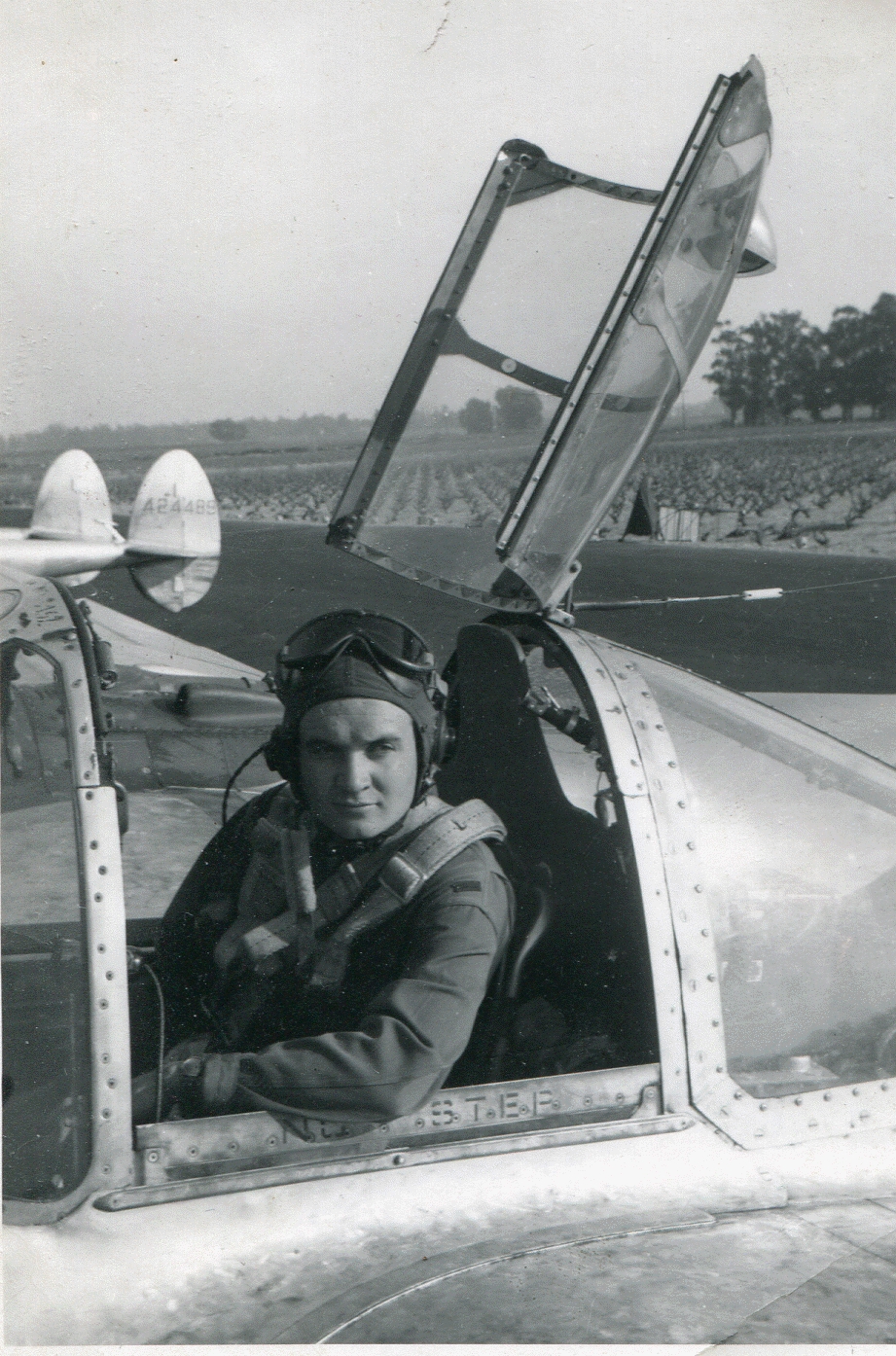
Millard Earl Gooch in front of a P-38 WWII
His license plate read “XP38FLR” because he flew P-38 aircraft in World War II. He always lamented the fact that he did not get to drop any bombs from his P-38, because he arrived in Germany at the close of the war.
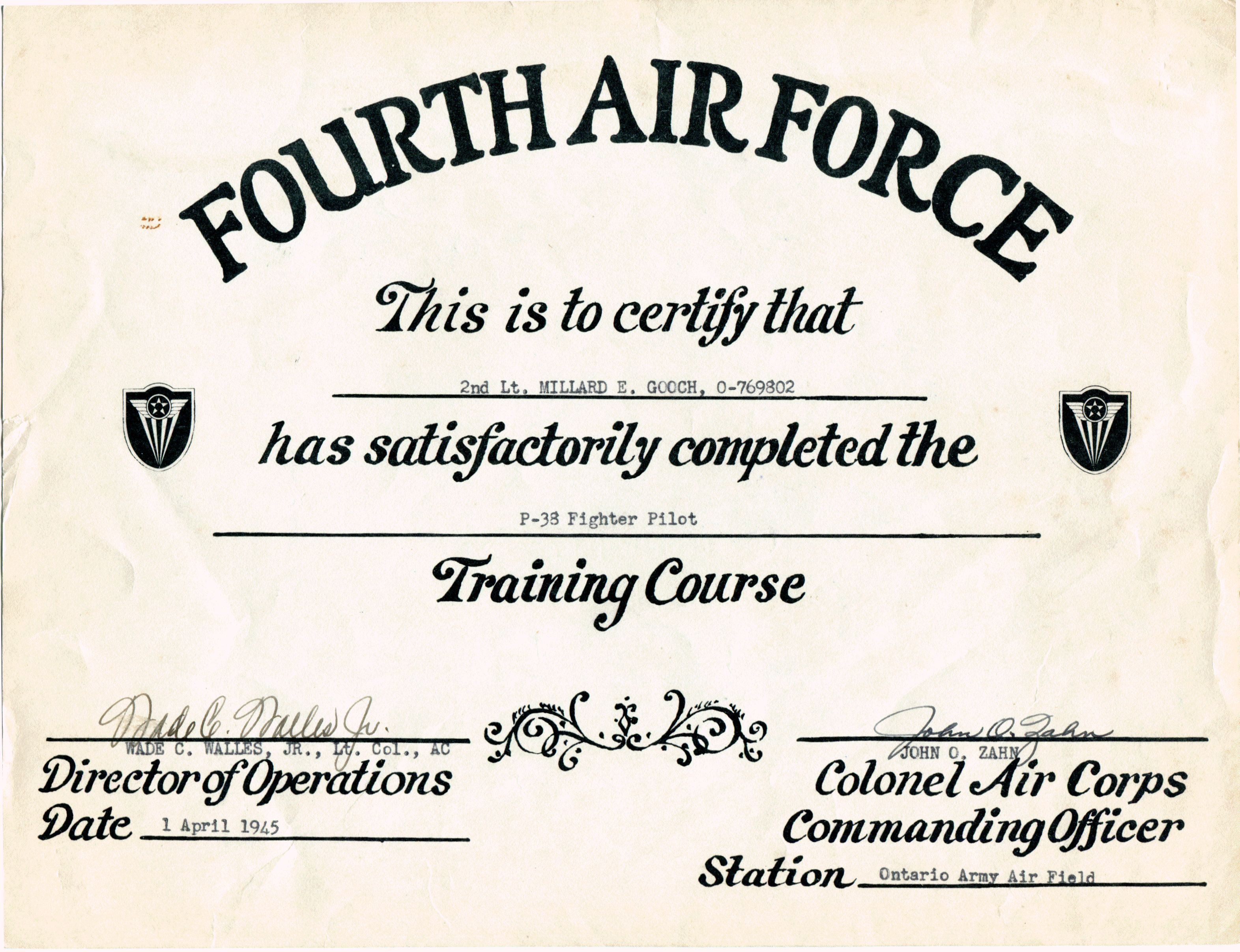
The story goes that during his flight training in the U.S. he had to have his wisdom teeth pulled, and he developed an infection which caused a delay in his deployment. While he was recuperating, his flight training buddies got shipped out to the Pacific, while he had to stay behind. He was sorely disappointed, but later commented that that toothache had changed the course of his life. He finished his training course in April 1945 and was sent to the European Theater, but the war in Germany had ended in March.
Flight training completion
Since he was among the last to arrive in Germany he would be one of the last to leave, and he got to witness post-war reconstruction in Germany and England. He actually served as the private pilot for the commanding General there, and had lots of stories about his adventures which he shared with us through the years.
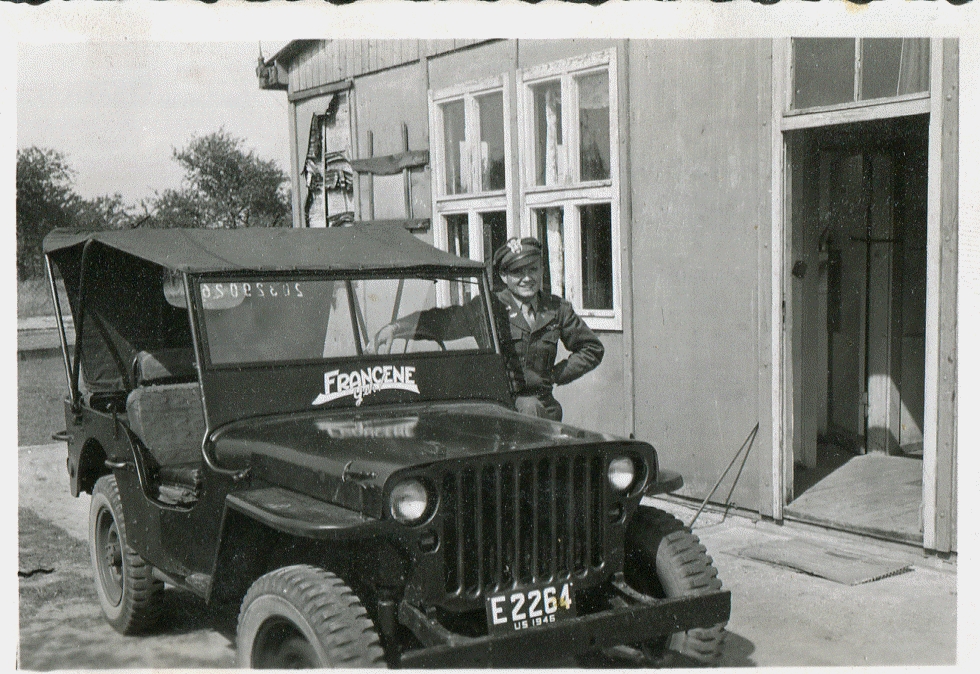
Dad named his airplane Kathleen, after his mom, and his jeep was named after his girlfriend, Francene (my mom).
Earl’s jeep “Francene”
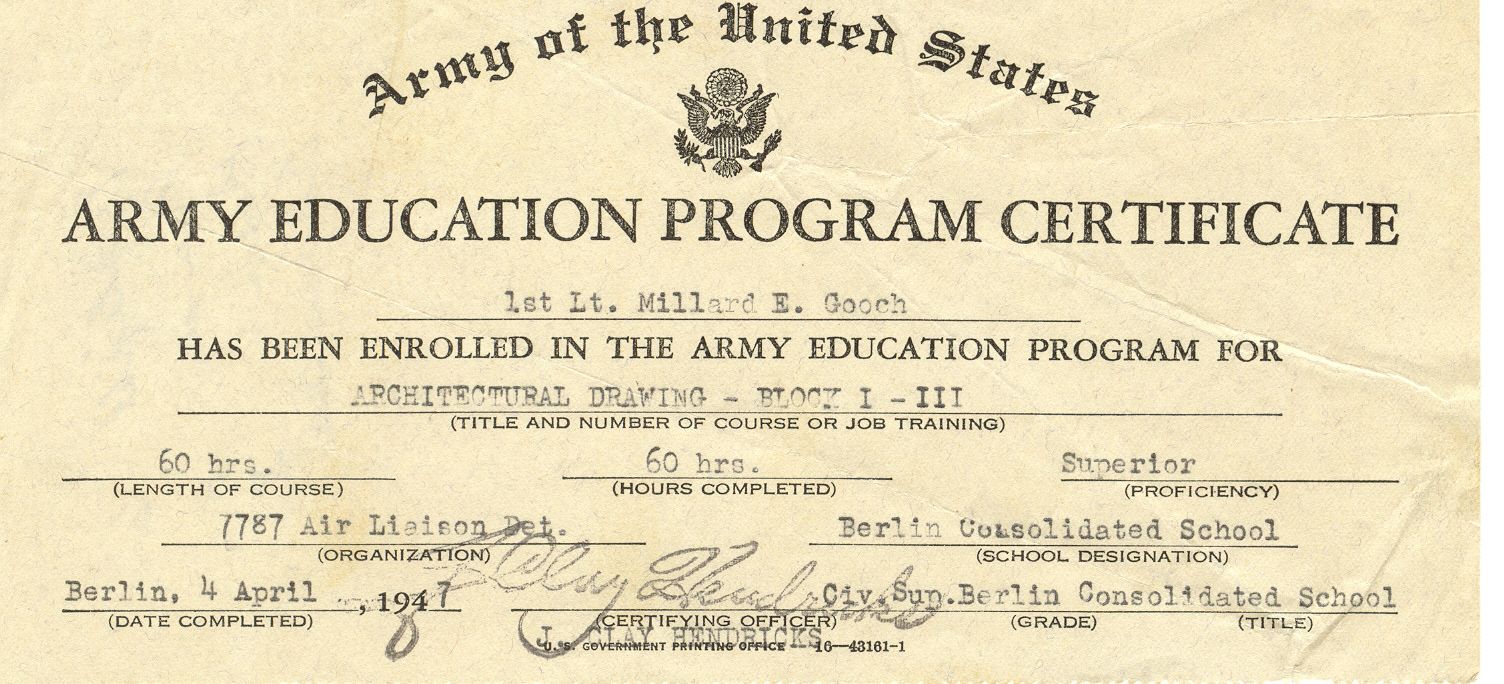
While in Berlin, he also was enrolled in the Army Education Program at the Berlin Consolidated School. Here is his certificate of completion for a drafting course. Notice the “superior” grade. Good job, Dad!
Berlin Consolidated School, Army Education Program
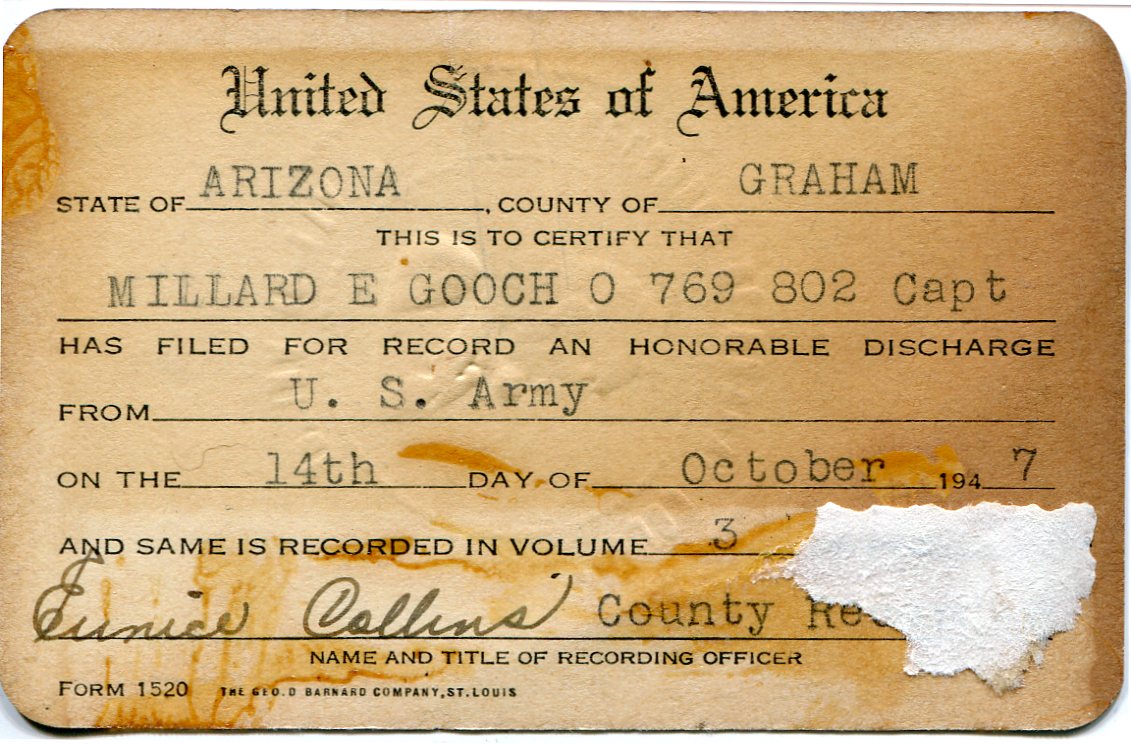
Dad was discharged in 1947 and went to University of Southern California on the GI Bill, graduating from the USC School of Architecture in 1953.
Earl Gooch military discharge card
Fortunately, my father left a memoir of his WWII experiences. What a treasure!

 On Granny's Trail