Genealogy Toolkit: Were they workin’ on the railroad?

One of the great 19th century developments in the United States was the railroad industry.  When the Central Pacific and Union Pacific Railroads joined at Promontory Summit, Utah, on May 10, 1869 and thus made the transcontinental railway a reality, it was a monumental day in the nation’s history.
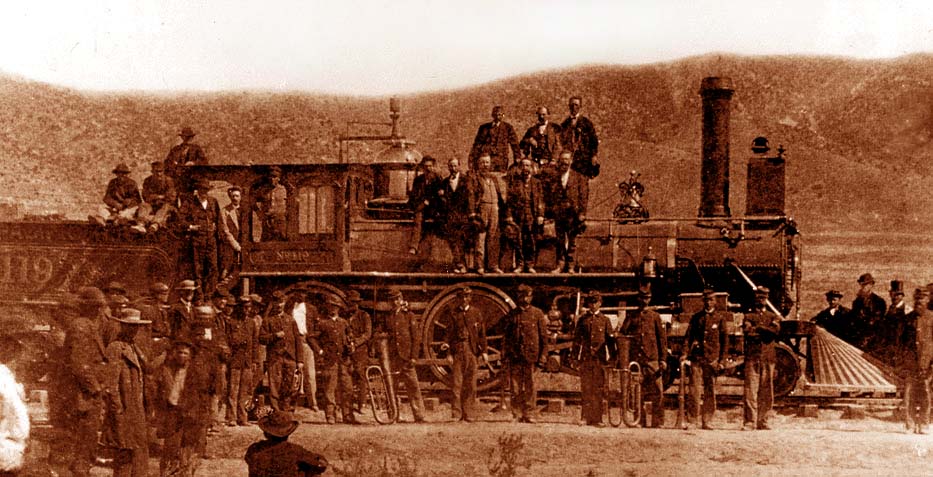
Alfred A. Hart stereoview #359 detail, “The Monarch from the East.”
showing the U.S. 21st Infantry Band in front of UPRR Locomotive #119.
Promontory Summit, UT, May 10, 1869. Courtesy National Park Service.

You may have had an ancestor who was employed by a railroad.  If so, you will want to locate employee records, which can be a good source of genealogical information.  Here is a good link to locating railroad employee records on the Genealogy Today website.

It has articles and links to employee records for various railroads, links to related organizations, and additional resources.

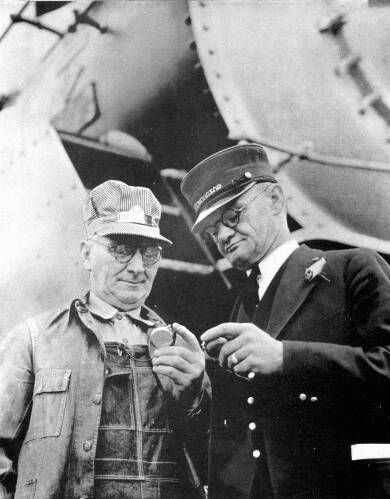
I also came across a helpful link on the http://www.catskillarchive.com that is “A Study of Railway Transportation—For Primary and Intermediate Grades” by the Association of American Railroads, 1942. It has photos and articles about various aspects of the railroad industry.  Where else could you find a swell picture like this one of a conductor and engineer comparing watches?
 

Even if you don’t have an ancestor who was employed by a railroad, you will want to learn about the railways that would have impacted their lives.  The Library of Congress Railroad Maps Collection, 1828-1900 is searchable by keyword, geographic location, and railroad line, among other things.

Enjoy some train sounds while you look for your railroading ancestors, courtesy of the Catskill Archive.  Click on the numbers below:

1   2   3   4    5   6   7   8


Associated Daughters of Early American Witches…and other lineage societies worth joining

It’s October, and we of course are all celebrating “National Family History Month.”  Have you decorated yet?  I noticed everyone is getting into the spirit of National Family History Month with skeletons, witches, and even a few headstones springing up in front yards.  Well done!

As part of my own celebration I decided to finally join a lineage society.  You know, those organizations that only accept members with ancestors who meet certain elevated standards, like Daughters of the American Revolution, or Colonial Dames of America, or… the Associated Daughters of Early American Witches.  Yes!

Looking through The Complete List of Active Hereditary Societies I discovered oh so many organizations for the rest of us. And they sound like their meetings must be way more fun:

  • Descendants of the Illegitimate Sons & Daughters of the Kings of Britain
  • Associated Daughters of Early American Witches
  • Flagon and Trencher (descendants of early tavern or innkeepers)
  • Order of Descendants of Pirates and Privateers
  • Registry of Infamous and Famous Relatives in American Families
  • National Society of Saints and Sinners

Alas/fotunately, I do not qualify for any of those societies.  Looking forward to the next big holiday I love to celebrate—Thanksgiving (because I was born on Thanksgiving and I really like pie)—I plan to apply to The General Society of Mayflower Descendants or National Society of Old Plymouth Colony Descendants.  They don’t let you join just because you like pie, however, so I will need to come up with some proof of descendancy from my 10th great-grandparents, John Alden and Priscilla Mullins.  I will let you know how it goes.

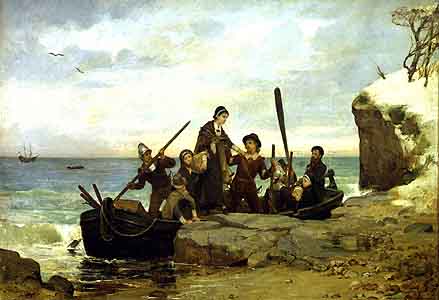
Bacon’s “Landing of the Pilgrims” on Pilgrimhall.org

Check out the Complete List of Active Hereditary Societies—I’ll bet you qualify for at least five organizations.  Let me know what you find.

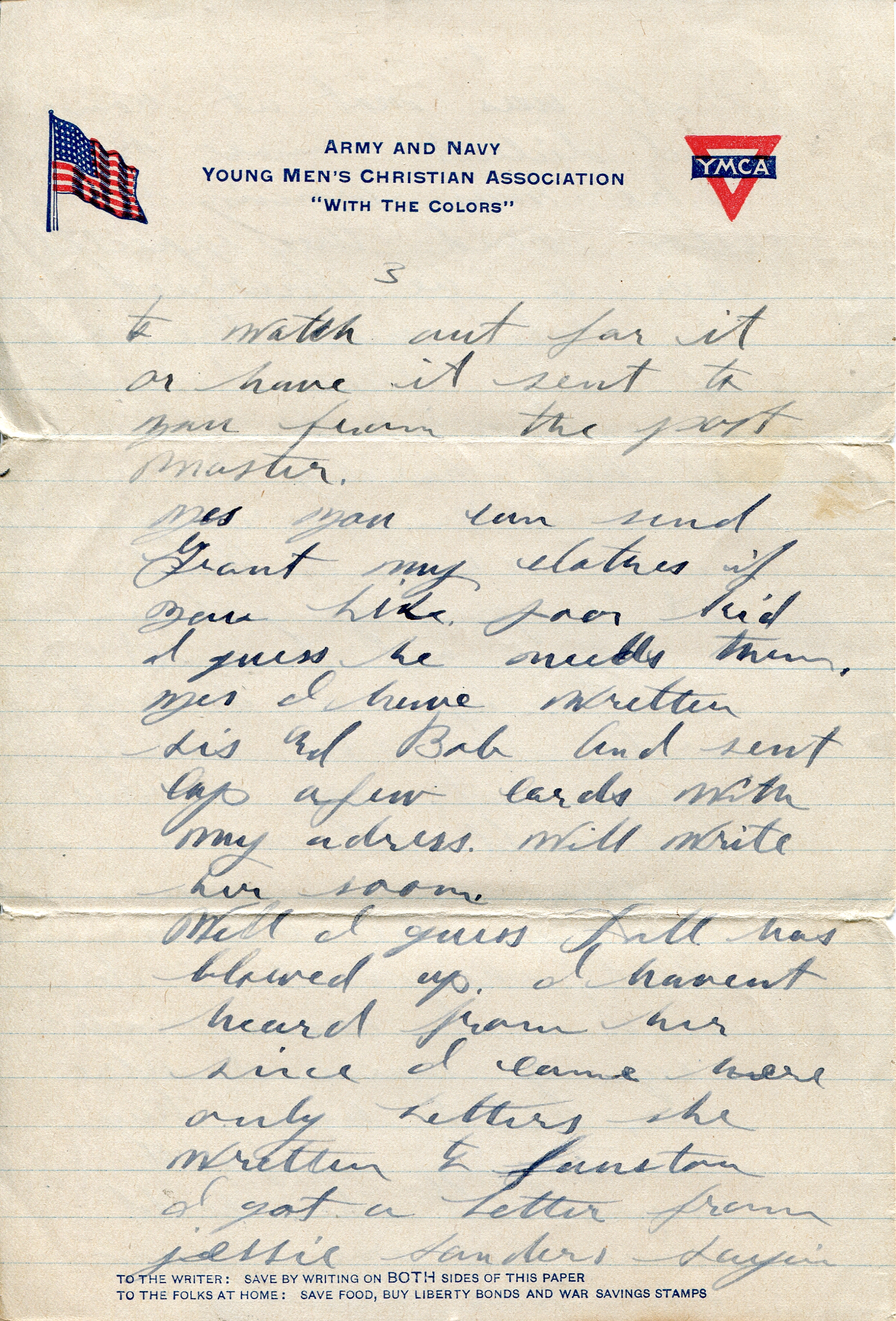
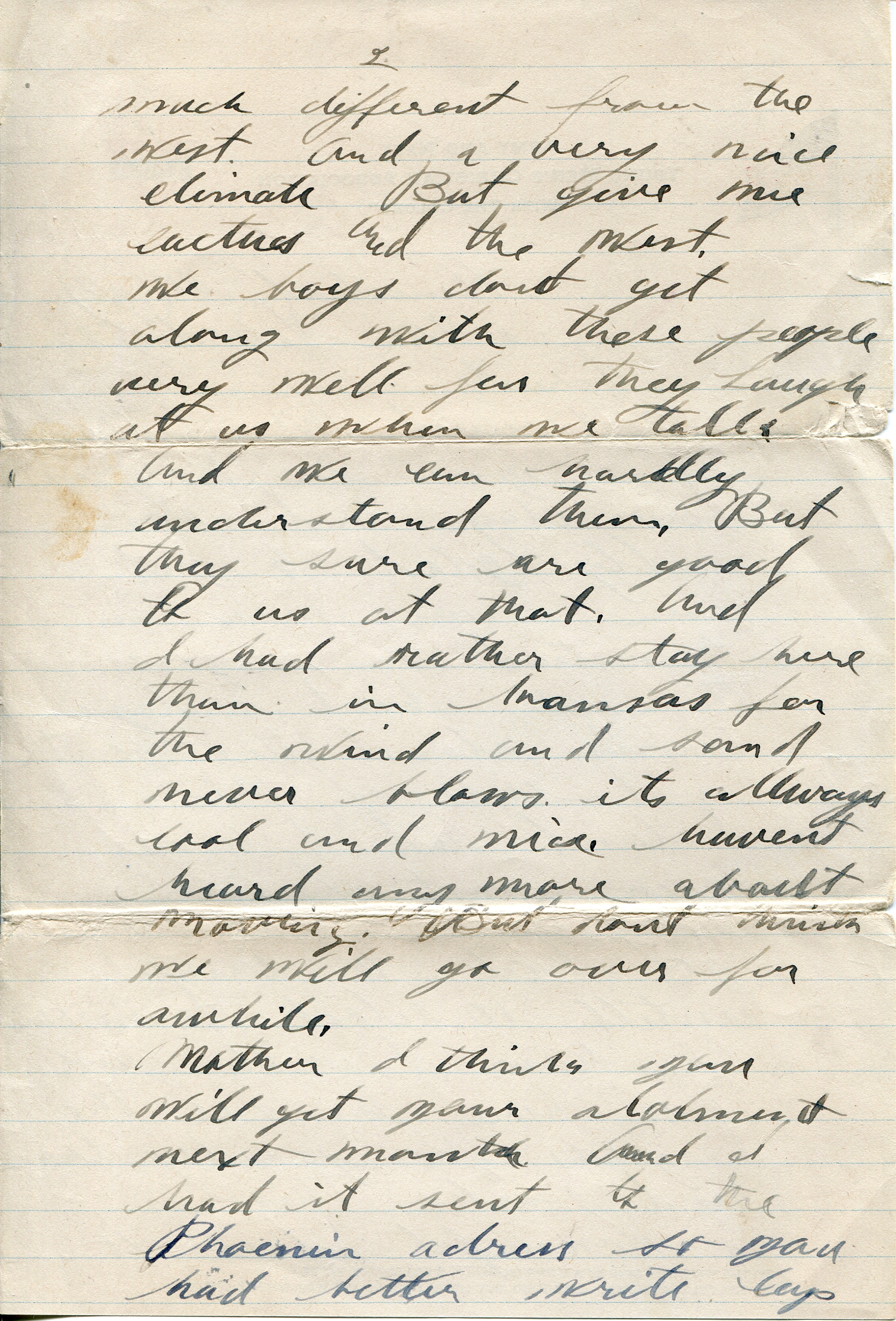
“The sights I have saw is worth a million” and “…there will be no capturing me as a prisoner”

These images were loaded in reverse order, so start at the bottom right to read them…

6th letter in a series.  To read the others click here:  1   2   3   4   5

[Letter from Pvt. Allen Lee Millard (“Nig”) Gooch to his family in Duncan, Arizona, written during World War I, 22 Jun or Jul 1918 at Hemptead, N.Y.  Transcribed by Dayna Gooch Jacobs. Slashes indicate page breaks. Original spelling and punctuation.]

Hemstead, N.Y.

6 p.m. Saturday 22  [Jun or Jul 1918]

Dear Parents,

Received two letters/ from you in the past/ few days and was/ awfly glad to get/ them.  I am now in/ Hemstead on a pass/ there is about a dozen/ towns alond the south/ east side of this/ Island and I have/ seen most of them/ today don’t have to/ go back to camp/ until 10 oclock tomorrow./  Oh how I wish you/ was here to see the/ sights the pretty homes/ and parks.  This is/ a wonderful place. So/ much different from the/ west and a very nice/ climate.  But give me/ cactus and the west./  We boys don’t get/ along with these people/ for they laugh/ at us when we talk/ and we can hardly/ understand them.  But/ they sure are good/ to us at that.  And/ I had rather stay here/ than in Kansas for/ the wind and sand/ never blows it s allways/ cool and nice.  Havent/  heard an more about/ moving.  But cant think/ we will go over for awhile./

Mother I think you/ will get your alotment/ next month and I/ had it sent to the/ Phoenix address so you/ had better write Cap/ to watch out for it/ or have it sent to/ you from the post/ master./

Yes you can send/ Grant my clothes if/ you like.  Poor kid./  I guess he needs them./  Yes I have written/ Sis and Bob and sent/ Cap a few cards with/ my address.  Will write/ her soon./

Well I guess Doll has/ blowed up.  I haven’t/ heard from her/ since I came here/ only letters she/ written to funston./  I got a letter from/ Jessie Sanders sayin/ Doll was not at home/ and didnt know when/ she was coming home./  Also said they expected/ her to be married/ in California the last/ of July.  Now I don’t/ know what to think/ if that hardly.  There/ is some thing wrong/ some where.  I think/ it a put up job in/ a way.  But I cant/ see why she doesn’t/  write.  For she surly/ has got my address/ and could get me a/ letter some way./  Any way she knows/ what she wants to do/ so I wont loose much/ sleep.  Of course I like/ her, and I know they/ are trying to split/ us up.  But she should/ have let me know/ she was leaving./  And if she has found/ someone else she likes/ better, he’s the guy for/ her.  This letter from/ Jessie was written the/ 13th,  I answered it with/ a very friendly letter/ and spoke of Doll/ very little.  So if they/ are working us some/ way they wont get far/ with me.  I have some/ friends in Duncan/ yet.  And if she lets/ them work her ____ well/ she isn’t the girl for/ me. I have enough to/ worry about allready./  So I will leave it all/ up to her and when I/ come back I will know/ all before goeing farther/ with her./

Now mother you/ musnt feel so/ blue and worried about/ me for if I cant be/ with you I am perfectly/ satisfied.  Am having/ a good time when I/ feel like it and the/ sights I have saw/ is worth a million./  This letter will have to/ do you all this time.  And/ I will go take in another/ town.  Tell dear old dad/ that if I get a chance/ I will go over the top/ with the same old/ smile I allways wore/ and there will be no/ capturing me as a prisoner./  We ware a tag around/ our neck that would/ identifie us if killed./

Love to all,

Chears Nig

Friday Finds: Into the Calisphere

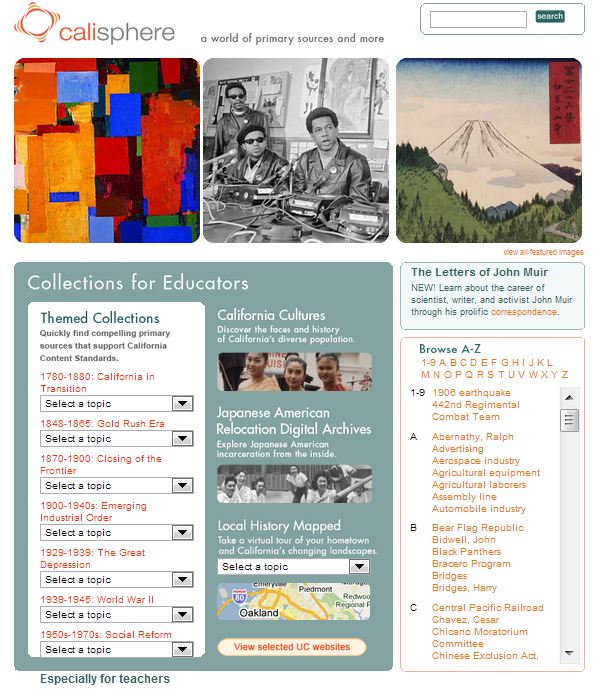
Here’s a fun and informative website that is not just for California researchers, even though it is a part of the University of California system.  “Calisphere” is loaded with interesting content in the form of primary sources—images and documents organized into subject areas or historical era.

Topics like “Everyday life” and “Popular culture”, along with “The Transcontinental Railroad” and “Japanese-American Relocation” are just a few of the interesting things to explore which could add perspective to a family history.

http://www.calisphere.universityofcalifornia.edu/

I also found a helpful guide to primary source analysis, intended to help history students but applicable to family historians:

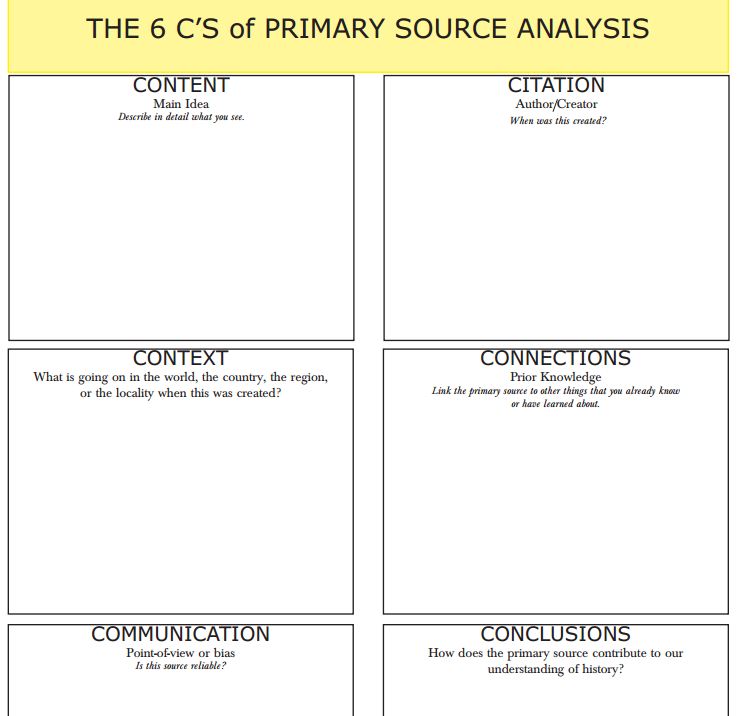
http://www.calisphere.universityofcalifornia.edu/ “The 6 Cs of Primary Source Analysis”

Calisphere is worth a visit—I know I plan on spending some time there.  I’d be interested in hearing what you find!

6 Flags over Texas? Fourth class headrights? Huh?

John Gooch, by tradition

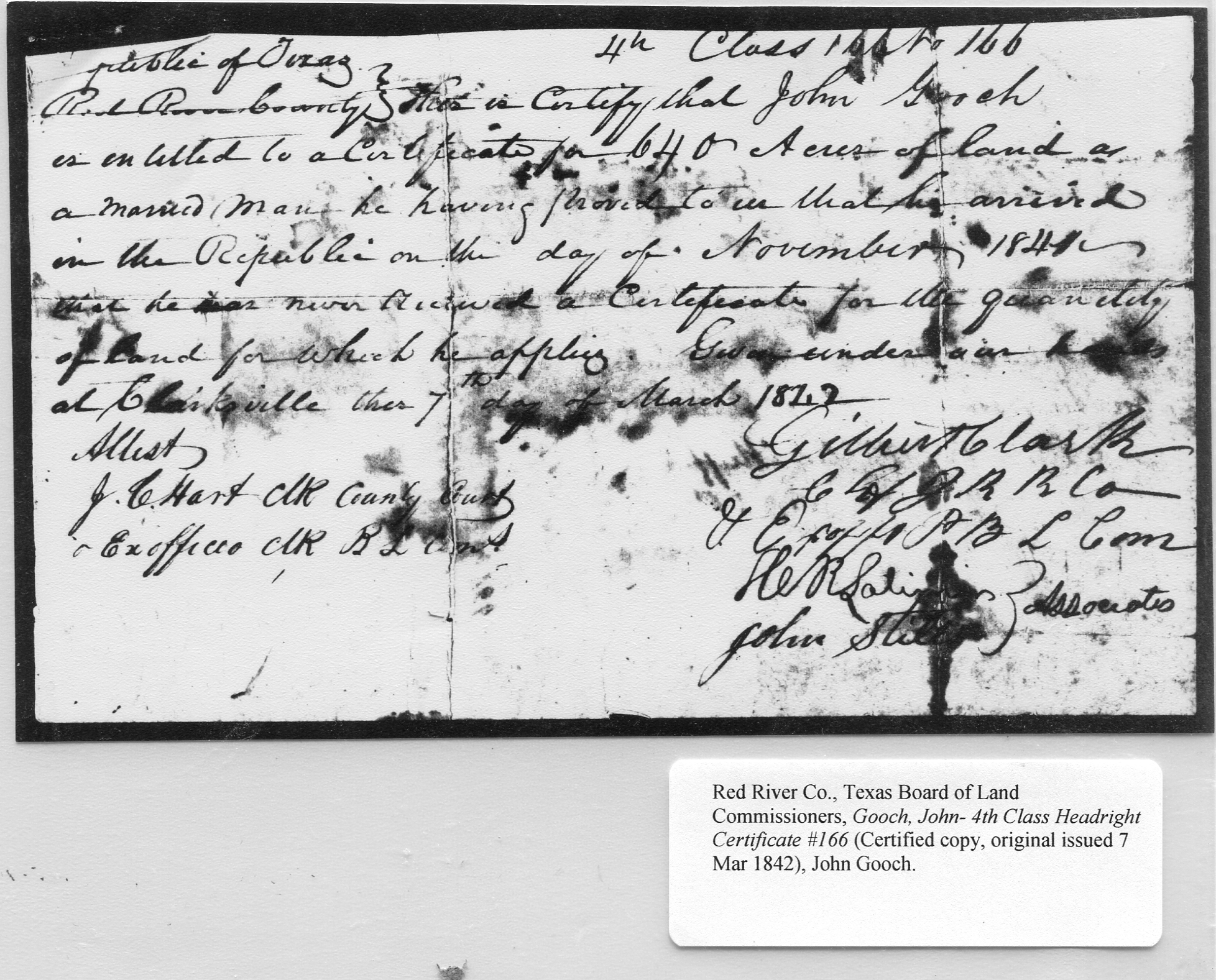
John Gooch received a 4th Class Headright Certificate #166 from the Republic of Texas and was granted 640 acres of land – that’s one square mile – by virtue of the early Texas Land Grant provisions.  “Headrights”, or land entitlements, were granted according to the date of arrival in Texas and other requirements such as marital status and minimum years of residency.

Here are a few documents from John Gooch’s  file, obtained from the Texas General Land Office. Note the first one is from the Republic of Texas, 7 Mar 1842, in Red River County:

Red River Co., Texas Board of Land Commissioners, Gooch, John- 4th Class Headright Certificate #166 (Certified copy, original issued 7 Mar 1842), John Gooch.

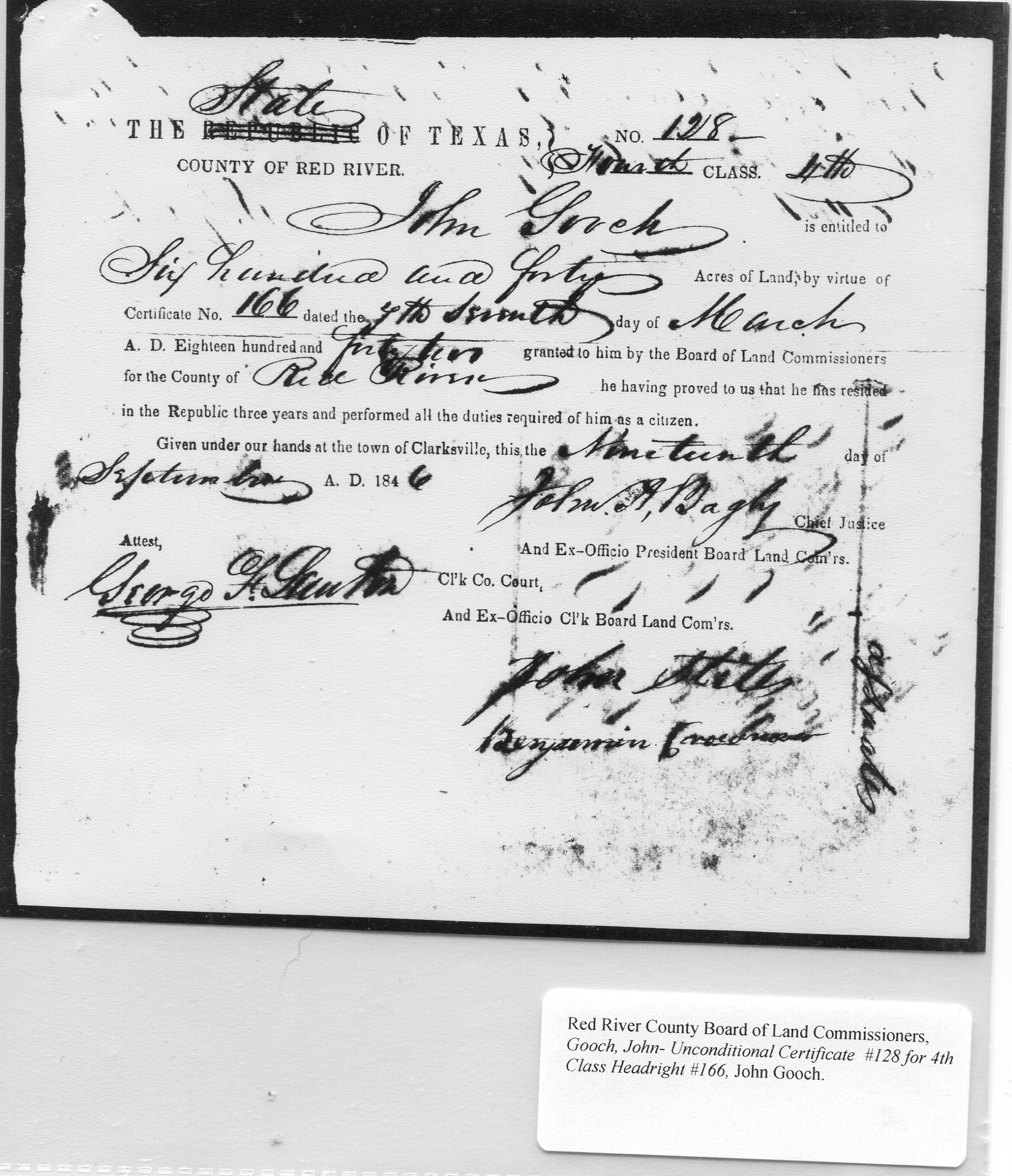
Here is his land grant certificate #128, and notice “Republic” of Texas has been crossed out, with “State” written in above. The date is 19 Sep 1846, and The United States had annexed the Republic of Texas on 16 Jun of 1845, causing a little problem with Mexico.  Texas had declared itself a Republic in 1836 –   Remember the Texas Revolution? – but Mexico did not recognize Texas independence, and the U.S. annexation of “their” territory was not appreciated. The U.S. declared war with Mexico  in May of 1846.  After 1845 the Texas Land Office saved on printing costs, crossing out “Republic” to write in “State”.  Besides, depending on the outcome of the war they could be back to “Territory” before long.

Red River County Board of Land Commissioners, Gooch, John- Unconditional Certificate #128 for 4th Class Headright #166, John Gooch.

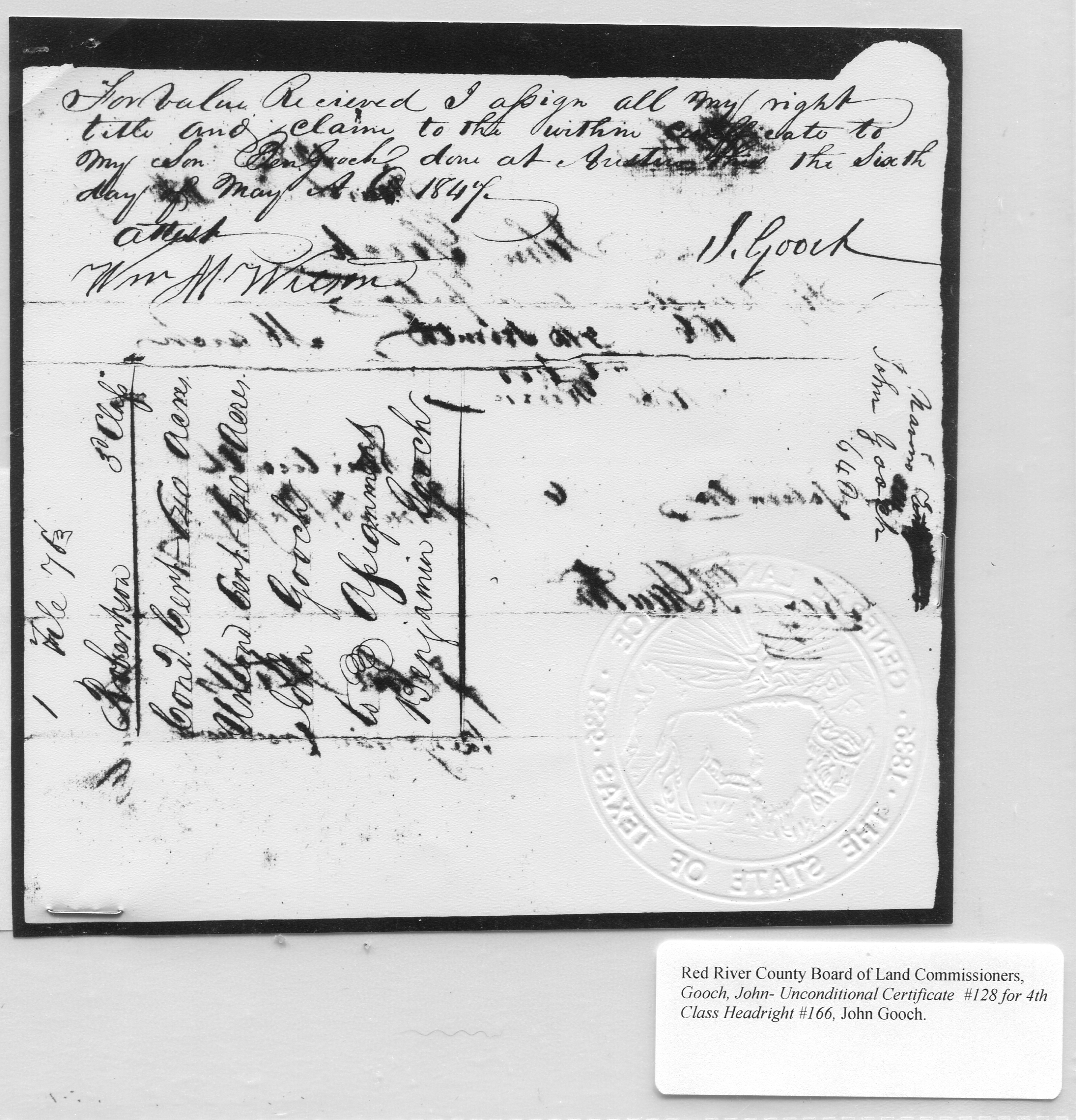
Notice on the back of this certificate John has transferred his rights to his son, Benjamin, with “Robertson” [County] also noted. I don’t know why it says 3rd class on it.

Red River County Board of Land Commissioners, Gooch, John- Unconditional Certificate #128 for 4th Class Headright #166, John Gooch. Transfer of rights to his son, Benjamin Gooch

The Texas General Land office has an online  index and images of early land grants issued by one of the governments of Texas: Spain, Mexico, the Republic of Texas, and the State of Texas. That’s four flags, if you were counting.  The other two flags over what is now Texas were France and the Confederate States of America, but they did not grant land.

To receive a 4th Class Headright Certificate a man had to have arrived in Texas between 1 Jan 1840 and 1 Jan 1842.  A married man was entitled to 640 acres, and a single man to 320 acres.  Ten acres had to be cultivated.

John Gooch’s headright certificate gives us valuable genealogical clues:

  1. He arrived in Nov 1841
  2. He was married
  3. He had a son named Benjamin
  4. Other records may exist in Red River and Robertson Counties

This is another excellent example of the value of land records in your family history research, and the importance of putting your research in the context of historical events.