Friday Finds: United States Online Historical Newspapers

I discovered this simple website that is a good resource for identifying historical newspapers online:  United States Online Historical Newspapers is found at https://sites.google.com/site/onlinenewspapersite/Home/usa . Its author has a blog you can subscribe to which has news about various newspaper digitization projects.

It is not comprehensive, but used together with other indexes, such as Historical Newspapers Online at  http://gethelp.library.upenn.edu/guides/hist/onlinenewspapers.html , you might find digital newspapers online you did not know existed.

FYI, if you find that one of these indexes identifies a digital newspaper at GenealogyBank, this subscription site is available for free at your nearest LDS Family History Center.

Of course, don’t forget about the Library of Congress newspaper resource “Chronicling America” found at http://chroniclingamerica.loc.gov/ .   You can search their digitized newspapers by clicking on “Search all digitized newspapers 1836-1922” or locate microfilmed newspapers by clicking on “Search U.S. Newspaper Directory, 1690 to Present” and then order a film through inter-library loan to your local library.

Happy Trails!

Three books for Western States research

Here are three books I have found helpful and interesting in researching the Western States:

1.  Ray Allen Billington, The Far Western Frontier, 1830-1860, (Harper and Row, 1956)

I like the illustrations and maps in this book.  There are some really good migration maps, such as “Routes to the Gold Fields, 1849,” and “The Overland Trails.”  It includes a valuable bibliography at the end of the book with many entries for each chapter.  There are 12 chapters that discuss various aspects of western U.S. expansion in a scholarly but understandable way, and I was impressed by the extensive footnotes.  I often use footnotes to lead me to other sources.

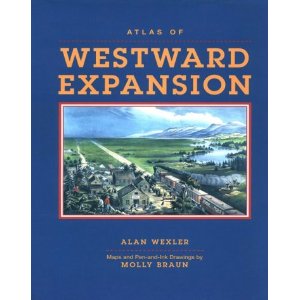
2.  Alan Wexler, Atlas of Westward Expansion, (Facts On File, Inc., 1995)

As an atlas, this book obviously is loaded with maps, and there is also good narrative for each one.  The maps are pen and ink drawings which are easy to understand, yet detailed enough to be useful.   It also has a good chronology of U.S. Territorial expansion (1750-1917) and a good bibliography.

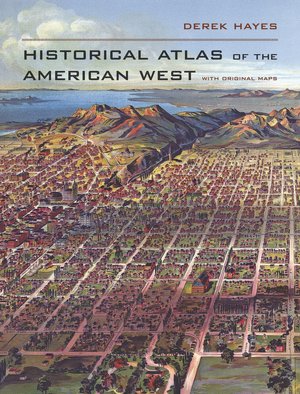
3.  Derek Hayes, Historical Atlas of the American West, with Original Maps, (University of California, 2009).

I think the description on Amazon.com says it best: “Spectacular in scope and visually brilliant, this atlas presents a sweeping history of the American West through more than 600 original, full-color maps and extended captions.”  It is a beautiful book and very interesting, too.  The maps are thoroughly source-cited, and there is also a valuable bibliography.  I highly recommend it.

These three books complement each other and combine to provide a good foundation for Western States research.

Friday Finds: U.S. Serial Set, and Early Tuba City, Arizona: Records of the Tanners and Foutzes part 3. The settlers sign an agreement.

This blog features a bit of what I found in the U.S. Serial Set about the Tanners and Foutzes in Tuba City, Arizona.

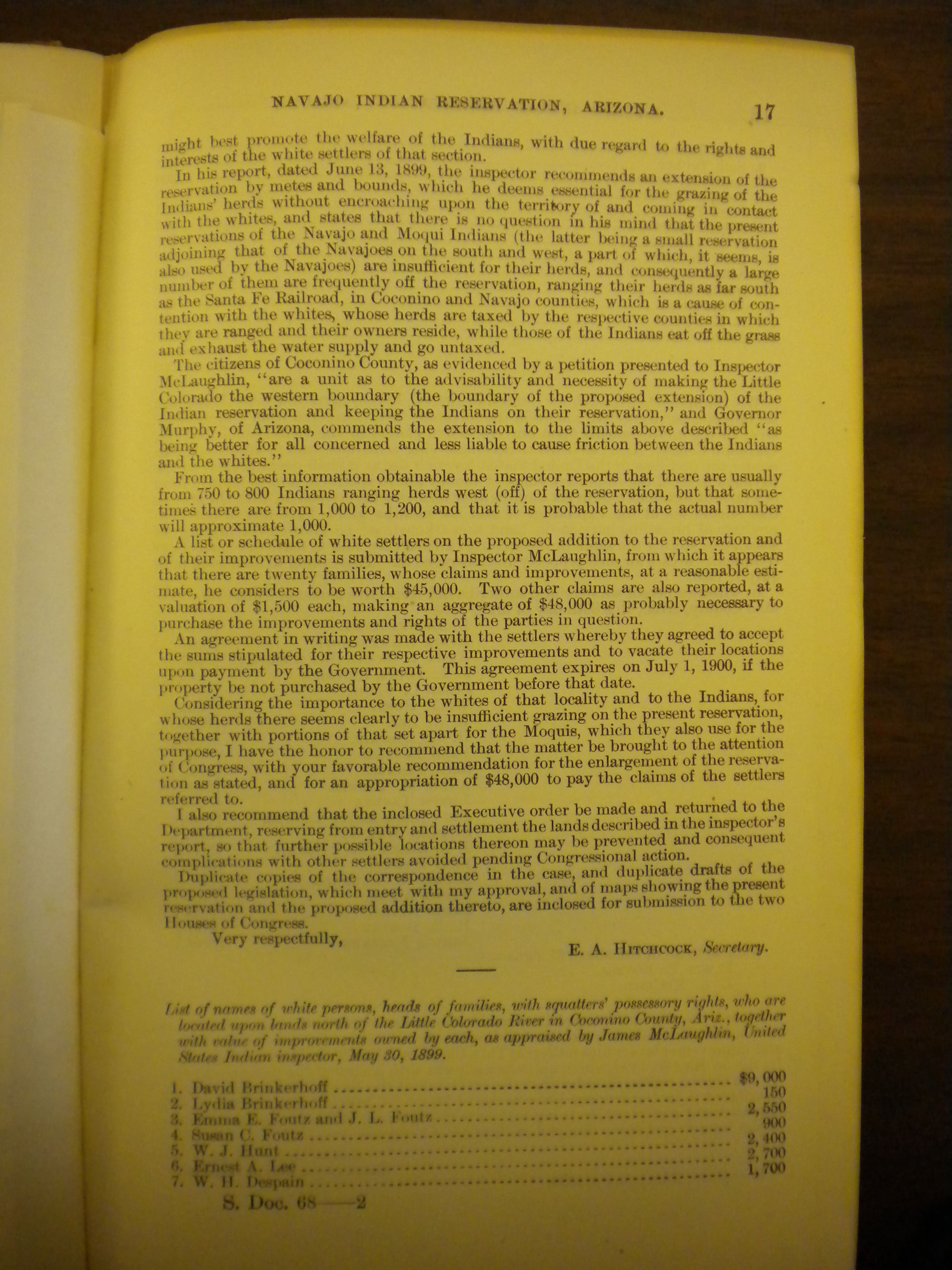
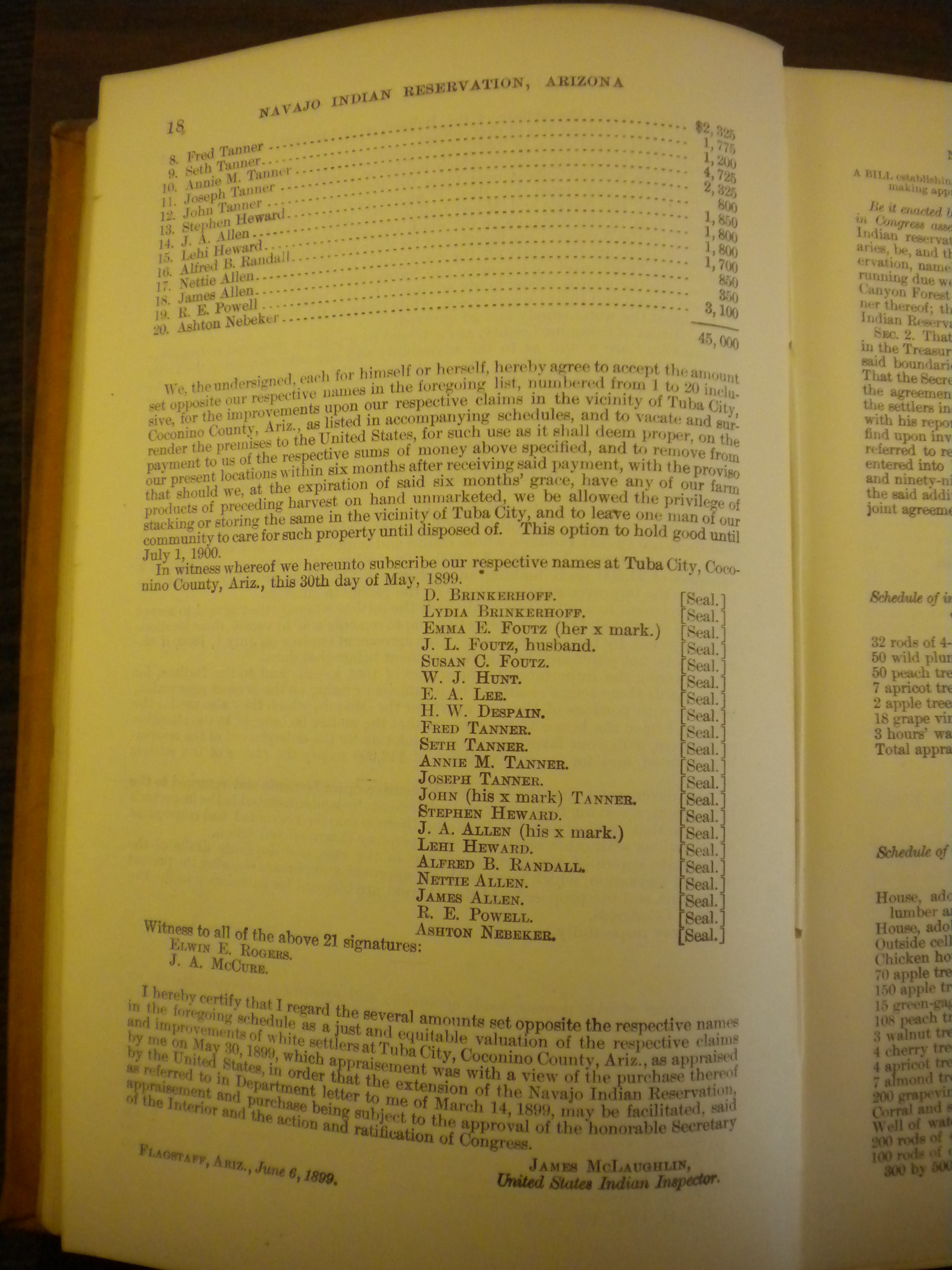
Congressional records are a rich source of valuable information for settlers in the Western States. That’s because there were so many issues involving land, Native Americans, settlers, and the Federal Government. Much of it ended up in the Congressional Record, found in the U.S. Serial Set, which is available in libraries which are federal repositories. University of Utah Marriott Library is one of these, and I was able to find an account of the federal government’s buyout of the Tuba City settlers. These two pages give the names of the settlers, the amount they were paid, and the agreement they signed 30 May 1899:

Senate Documents, v. 8, 56th Congress, 1st session, 1899-1900, #3850

This published version of the Congressional Record after 1817 is called the Serial Set; prior to 1817 the record is called the American State Papers. There are various indexes you can utilize to find things in them:

Stay tuned for more items from the Serial Set…

Early Tuba City, Arizona: Records of the Tanner and Foutzes, part 1

My grandmother, Annie Marie Tanner, was born in Tuba City, Arizona on 18 Aug 1901.  I knew she grew up in Kirtland, San Juan County, New Mexico and wondered exactly when and why the family left Arizona.  Tuba City lies within the Navajo Reservation in the northeast corner of Arizona, while Kirtland is just outside the Navajo reservation in the northwest corner of New Mexico.  Using newspaper articles, Congressional records, and correspondence within federal agencies I pieced together the fascinating story of the early Tuba City settlement and will share some of the records in coming weeks , while also highlighting the archives and libraries where the records were found. Briefly, the settlers who had arrived in the 1870s were bought out by the federal government when the Navajo Reservation was expanded to include their property. There is a lot more to the story, though, as the records will reveal.

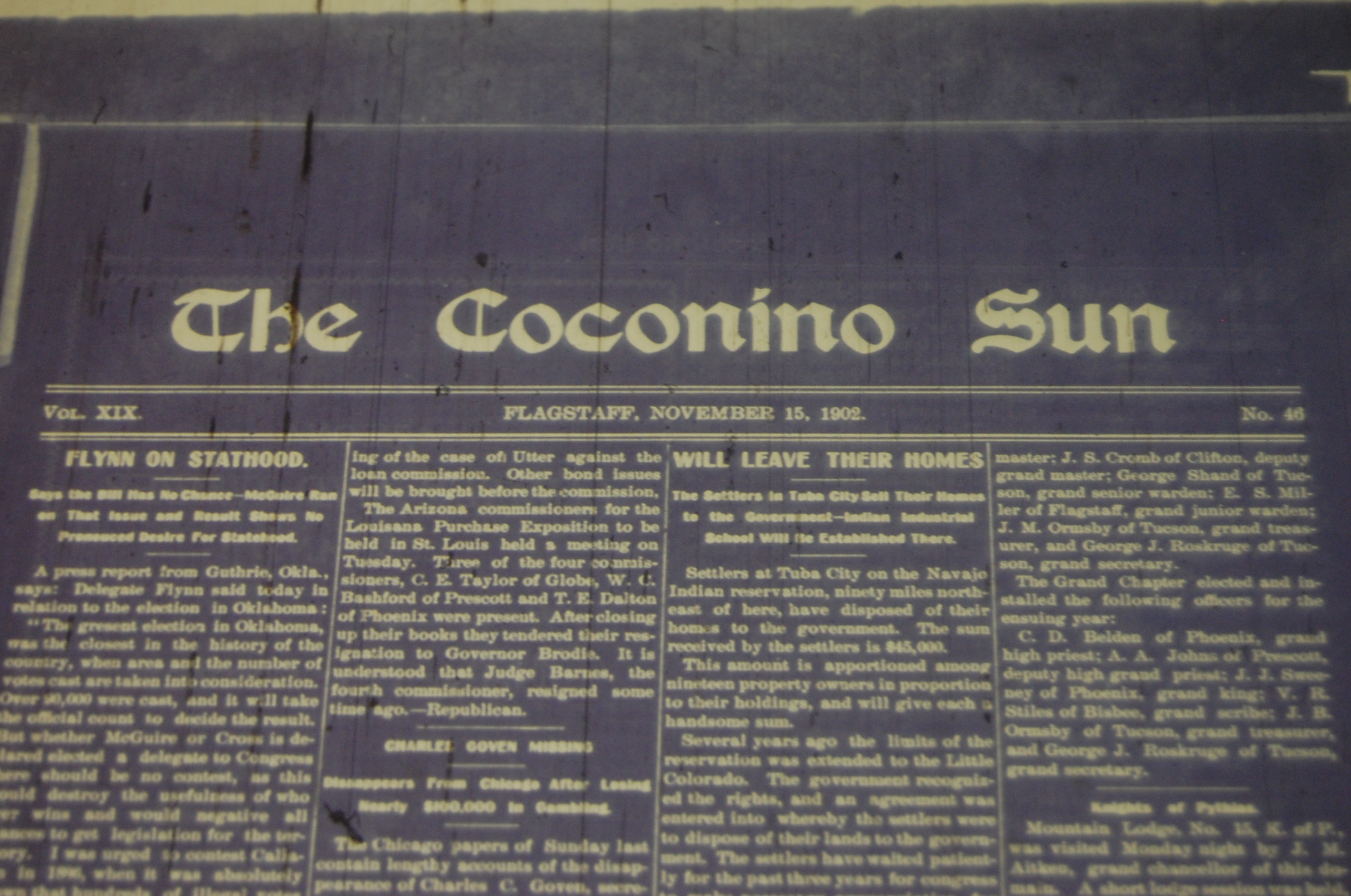
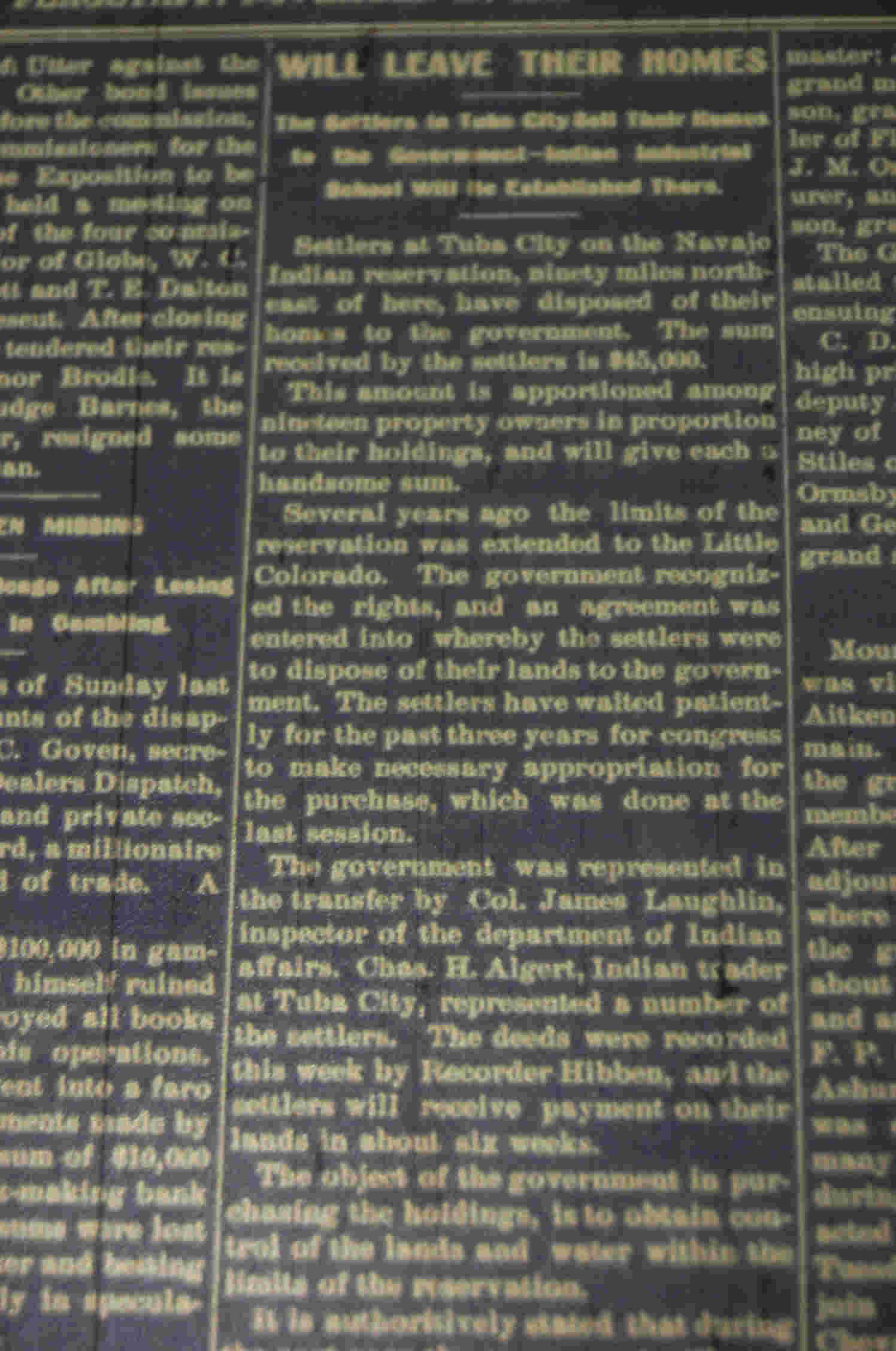
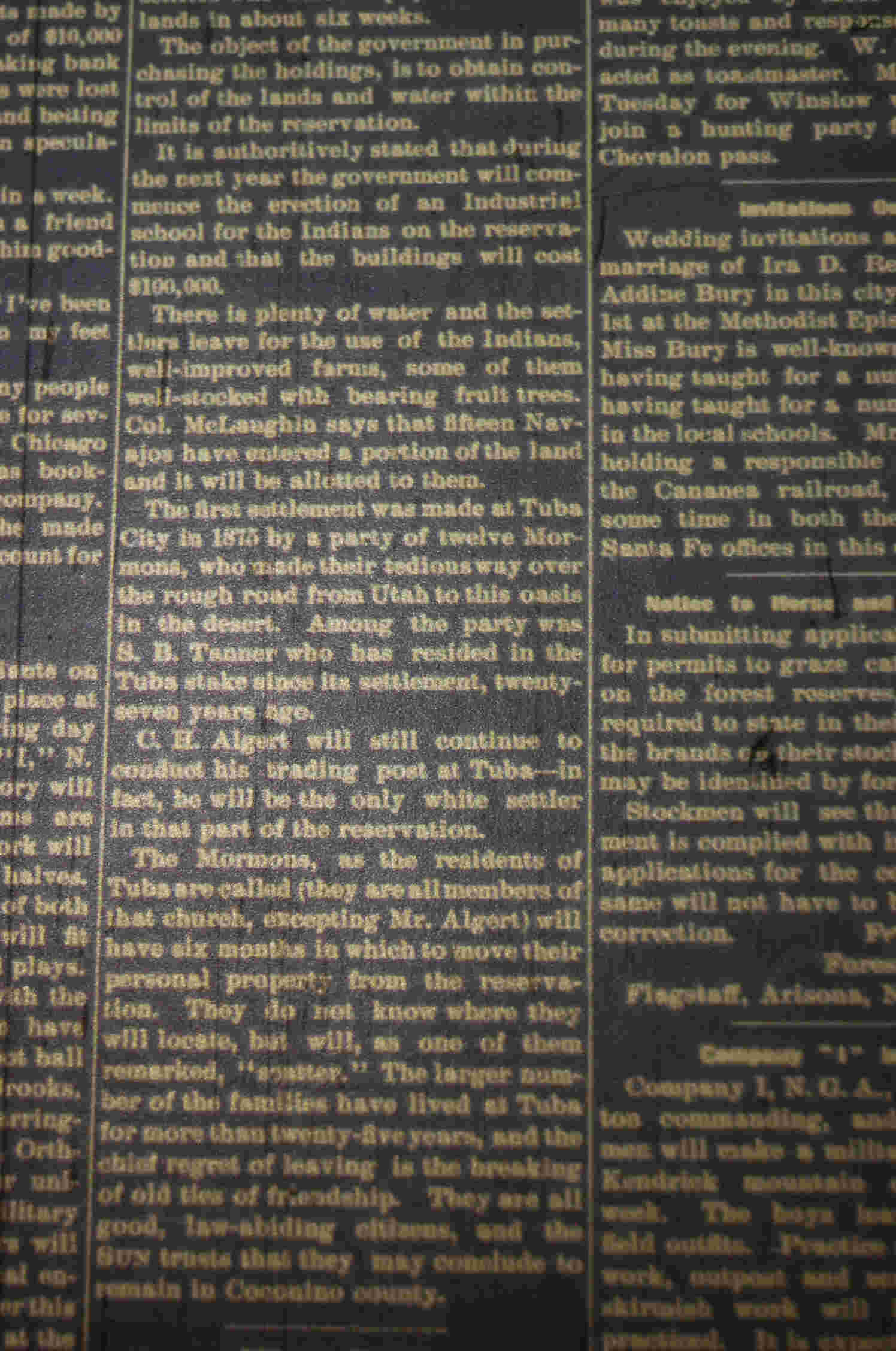
Here is a newspaper article, “Will Leave Their Homes”,  (November 15, 1902 Coconino Sun, page one, column three) summing up the situation in Tuba City in 1902.  It is blurry because it is a photo of a microfilm image taken at the Arizona State Archives in Phoenix, Arizona.

Note the mention of S.B. Tanner.  That is Seth Benjamin Tanner, father of Joseph Baldwin Tanner and  grandfather of Annie Marie Tanner.  Watch in the coming weeks for records from this interesting period of time in Tuba City, and  the Tanner and Foutz families.

Friday Finds: Denver Public Library – Western History and Genealogy

Denver Public Library: Western History Genealogy: Browse Collections – Genealogy Collection.

According to the Denver Public Library’s website, their Western History Genealogy collection ” offers an extensive collection of genealogical and historical sources numbering about 60,000 volumes and 75,000 pieces of microform, as well as magazines, charts, clippings, and manuscripts. The collection at the Denver Public Library constitutes the largest collection in the Rocky Mountain area and the second largest between the Mississippi River and the West Coast.”

Their website has links to digital collections such as:

If you have ancestry in the Rocky Mountain states you will want to check out this library online and in person. Happy Trails!